End-to-End Robot Training: How Robots Learn Skills in 2026 (The Ground-Truth Guide)
End-to-end robot training replaces the hand-coded perception-planning-control stack with one learned model that maps sensors straight to actions. This is the complete, sourced guide: the pipeline, the three learning methods, all 18 foundation models compared, where the data comes from, sim-to-real, and the contact-force gap holding it back.
End-to-end robot training is the practice of learning a single model that maps a robot's raw sensors (camera images, and sometimes language and proprioception) directly to its motor actions, instead of hand-engineering a pipeline of separate perception, planning, and control modules. The promise is simple: show the robot the task instead of programming it, and let one network absorb the messy middle. In 2026 this is how most new manipulation and humanoid skills are built.
This guide is meant as a ground-truth reference. Every model count, parameter figure, and dataset statistic below traces to the BLO LAB registries at blomegalab.com/datasets, which are cleaned and sourced from the original papers and model cards. Where a claim is a judgement rather than a number, it is written as one.
What does end-to-end actually mean here?
The classical robot stack is a relay of hand-built stages: detect objects, estimate pose, plan a path, then run a controller. Each stage has its own model and its own failure mode, and the seams between them are where brittle demos die. End-to-end training collapses that relay into one differentiable model trained on examples, so the system optimizes the thing you actually care about (did the task succeed) rather than a proxy at each stage.
The canonical pipeline in 2026 has five stages, and the last one loops back: demonstrations become data, data trains a policy or VLA model, the model is refined across simulation and real hardware, and then it is deployed, where on-robot experience becomes new data. The loop, not any single stage, is the product.
How do robots learn end-to-end? The three methods
Almost every end-to-end system in production is one of three methods, or a blend. Imitation learning (behavioral cloning) trains the policy to copy demonstrations: it is data-hungry but stable, and it underpins ACT and Diffusion Policy, the two most-used manipulation policies. Reinforcement learning lets the robot improve by trial and reward, which is powerful in simulation but expensive and reward-fragile on real hardware. Vision-language-action (VLA) foundation models pretrain a large model on web-scale vision-language data plus robot demonstrations, then fine-tune, so a single model generalizes across tasks and embodiments.
The field's center of gravity moved from RL toward imitation-at-scale and VLAs once it became clear that data diversity, not clever reward shaping, is what makes policies robust. Sergey Levine's line of work below traces that shift directly, from end-to-end visuomotor policies to reward-free robotic RL.
The robot foundation models, compared
As of 2026 the BLO LAB Robot Foundation Model Registry tracks eighteen end-to-end models, normalized to the same fields. Parameters span three orders of magnitude, from the 27-million-parameter Octo Small to the 55-billion-parameter RT-2-X. Twelve ship open weights and six are closed, and the split is not random: the open dozen are the app-layer workhorses, while the six closed models (RT-2, RT-2-X, Gemini Robotics, Helix, Redwood, DYNA-2) are the frontier company results.
| Model | Org | Params | Type | Open | Year |
|---|---|---|---|---|---|
| RT-1 | 35M | VLA | Yes | 2022 | |
| RT-1-X | Google DeepMind + consortium | 35M | VLA | Yes | 2023 |
| RT-2 | Google DeepMind | up to 55B | VLA | No | 2023 |
| RT-2-X | Google DeepMind | 55B | VLA | No | 2023 |
| Octo | Berkeley/Stanford/CMU/GDM | 27M / 93M | policy | Yes | 2024 |
| OpenVLA | Stanford + consortium | 7B | VLA | Yes | 2024 |
| pi0 (openpi) | Physical Intelligence | 3B | VLA | Yes | 2024 |
| pi0.5 | Physical Intelligence | ~3B | VLA | Yes | 2025 |
| GR00T N1 | NVIDIA | 2B | VLA | Yes | 2025 |
| GR00T N1.5 | NVIDIA | 3B | VLA | Yes | 2025 |
| GR00T N1.6 | NVIDIA | 3B | VLA | Yes | 2025 |
| ACT | Stanford (ALOHA) | ~80M | policy | Yes | 2023 |
| Diffusion Policy | Columbia/TRI/MIT | small | policy | Yes | 2023 |
| SmolVLA | Hugging Face (LeRobot) | ~450M | VLA | Yes | 2025 |
| DYNA-2 | Dyna Robotics | undisclosed | world-action | No | 2026 |
| Helix | Figure AI | undisclosed | VLA | No | 2025 |
| Redwood | 1X Technologies | ~160M | VLA | No | 2025 |
| Gemini Robotics | Google DeepMind | undisclosed | VLA | No | 2025 |
The open-versus-closed split is the single most useful fact for anyone starting an end-to-end project, because it decides whether you fine-tune an existing model this weekend or wait for an API.
Where does the training data come from?
Every model above is data-limited, not compute-limited, and end-to-end policies learn only what they are shown. Training data comes from three wells. Teleoperation, where a human puppeteers the robot (ALOHA-style rigs), gives perfectly on-embodiment demos but is slow and expensive. Egocentric human video (Ego4D, Ego-Exo4D, and the wave of head-camera capture) is abundant and cheap but lacks the robot's action labels and force. Simulation is effectively free and infinite but carries a reality gap. Most 2026 recipes blend all three: pretrain on human video, fine-tune on teleop, and augment with sim.
The looming constraint is a data wall: the open teleoperation corpus is small relative to what generalist policies need, which is why 2025 to 2026 saw the shift toward human video and toward proving a human-to-robot scaling law (DYNA-2 trained on roughly a million hours of egocentric human video). The community tooling for this, LeRobot, is worth watching below.
Sim-to-real: training in simulation, deploying on hardware
Because real-robot data is the bottleneck, a large share of end-to-end training now happens in simulation and is transferred to hardware. NVIDIA's Isaac Sim and Isaac Lab are the de facto stack: massively parallel physics, domain randomization to blur the reality gap, and a direct path from a trained policy to a humanoid like the Unitree G1 via GR00T. The frontier problem is closing the sim-to-real gap for contact-rich tasks, where simulated physics diverges most from the real world, which is exactly where the next section's force gap bites.
The gap nobody trains on: contact force
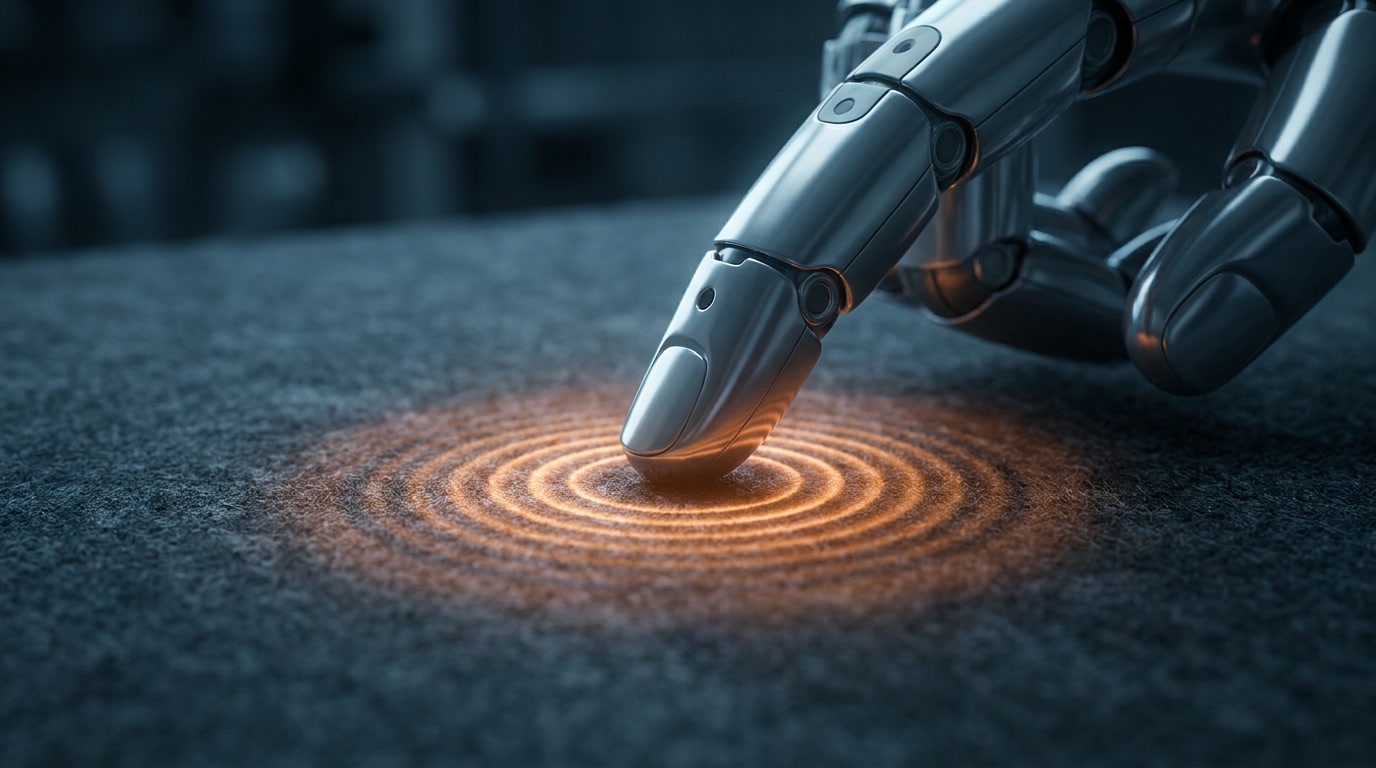
Here is the BLO LAB analyst take, and the reason this pillar exists. End-to-end policies are trained overwhelmingly from vision, yet the tasks that matter most (plugging a connector, folding cloth, seating a cap, handling something fragile) are defined by contact force, not appearance. The BLO LAB Robot Manipulation Dataset Registry makes the shortfall concrete: of 19 major manipulation datasets, only 2 record contact force. A generalist policy trained on that corpus has essentially never felt anything.
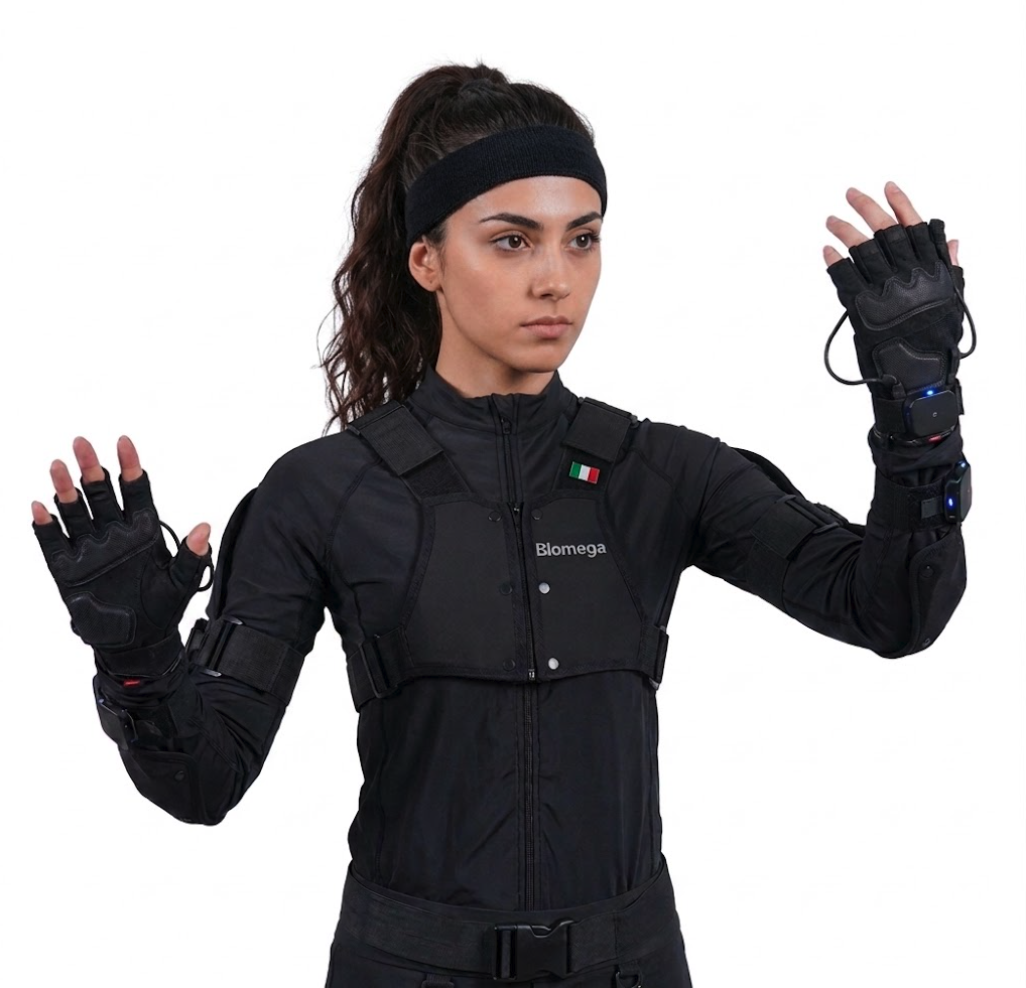
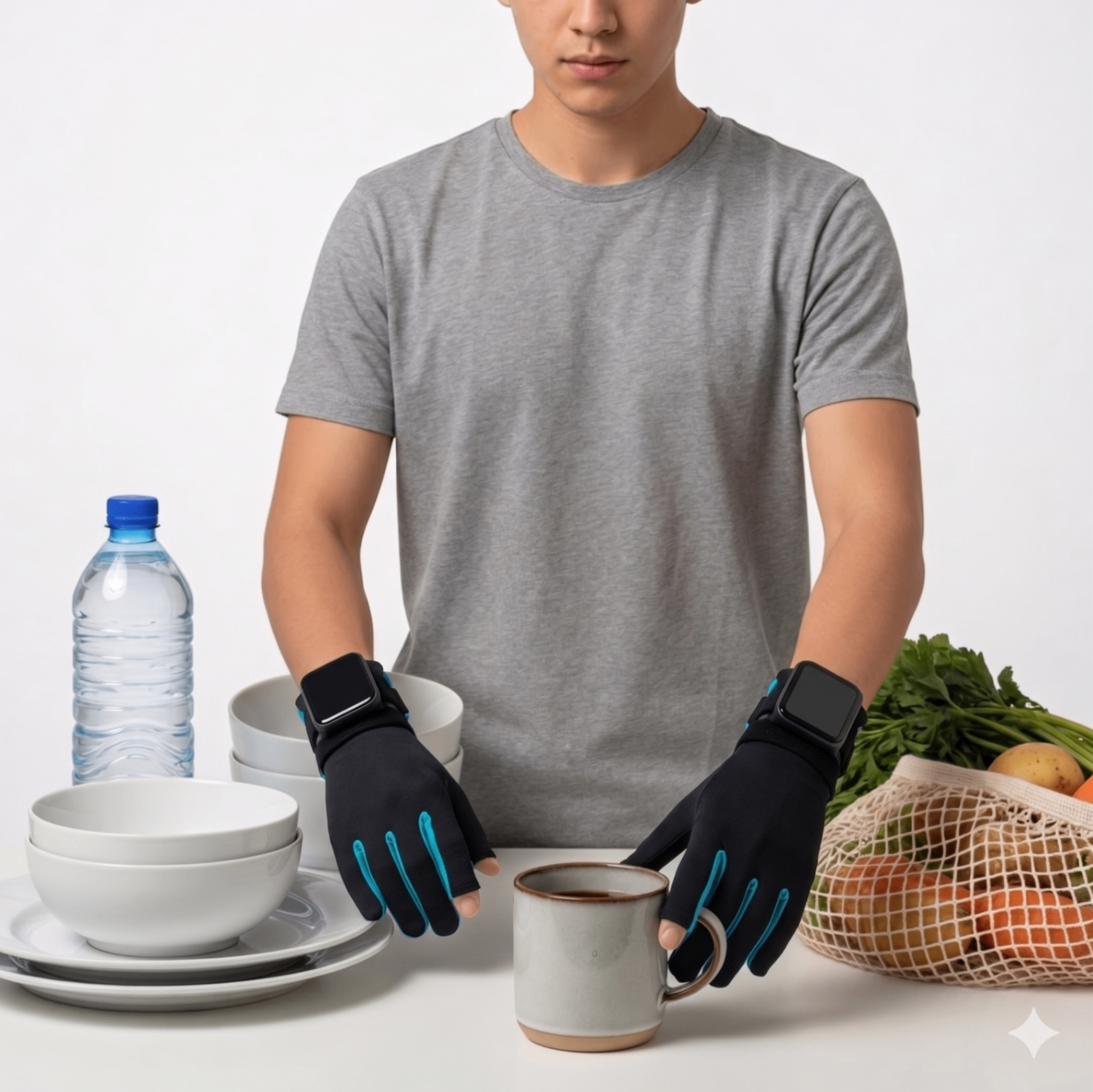
That is a training-data problem, not a model problem, and no amount of extra parameters fixes it. A policy cannot learn force it was never shown. This is the specific well Blomega captures: synchronized fingertip force, finger bend, and wrist motion aligned to point-of-view video, so end-to-end models can learn the contact dynamics the video-only corpus omits.
Frequently asked questions
Is end-to-end learning better than the classical robot stack? For contact-rich, unstructured manipulation, learned end-to-end policies now generalize better than hand-built pipelines, which is why the field moved. For highly repetitive, structured industrial tasks with fixed geometry, a classical programmed stack (Fanuc-style) is still cheaper and more predictable.
Do I need to train a model from scratch? Almost never. Twelve of the eighteen models above ship open weights, so the standard path is to fine-tune Octo, OpenVLA, pi0, GR00T, or SmolVLA on your own demonstrations, which is a weekend rather than a research program.
How much data does end-to-end training need? More than you expect and more diverse than you expect. Diversity of scenes, objects, and (critically) contact conditions matters more than raw hours. Policies fail on the long tail they never saw.
Why does contact force keep coming up? Because vision cannot recover it. Two grips can look identical and differ by newtons, and only 2 of 19 datasets record force, so it is the single most under-supplied modality in end-to-end training.
Sources, registries, and further watching
This guide is built on the BLO LAB registries (foundation models, datasets, sensors, force-to-task) and the sourced talks embedded above. Everything is cross-linked so a claim can be traced to its origin.
Building or training robots?
We license manipulation datasets and run custom capture programs. Get in touch to see what fits.