How Much Force Does It Take? A Registry of the Newtons Behind Everyday Tasks
A cleaned, sourced registry of the force and torque humans apply to everyday manipulation tasks, from 0.45 N to press a key to ~5 Nm to open a jar. The one axis a camera cannot see, refined from the ergonomics literature into agent-ready data.
A robot that wants to crack an egg needs to know it takes about 45 newtons to fracture the shell, and that a few newtons more crushes it. It needs to know a jar lid wants roughly 5 newton-metres, a USB plug up to 35 newtons, a wine cork over 200. This number, the force or torque a task actually requires, is the one signal a camera cannot see and that almost never appears in training data. So we refined it from the ergonomics and biomechanics literature into one clean, sourced, agent-ready registry: blomegalab.com/data/force-to-task.json.
Why the number matters
Vision tells a policy where the object is and pose tells it how the hand moves, but neither tells it how hard to press. Contact-rich manipulation is decided by force: a grasp that is too soft slips, too hard breaks. Force and impedance controllers need a target, and reinforcement or imitation policies learn the target far faster when it is bounded rather than discovered by trial and error on real hardware. A registry of task forces is a prior that shrinks the search and prevents the expensive failures.
It is also a map of a spectrum that spans three orders of magnitude. The lightest deliberate manipulation force we found is pressing a keyboard key at under half a newton; the heaviest everyday capability is a maximal hand grip near 450 newtons. Everything a robot hand does in a kitchen or on a bench lives on that scale.
The registry
Twenty-seven tasks, each normalized to the same fields: category, action, whether the measure is a linear force in newtons or a rotational torque in newton-metres, a typical value, a range, and a source with a confidence level. Accessibility-standard figures are marked as maximum ceilings rather than typical applied force. The full, queryable version is the JSON linked below.
- Open a screw-cap jar lid, ~5 Nm (torque) · high
- Open a PET bottle cap, ~1.0 Nm (torque) · high
- Pull a wine cork, ~260 N · high
- Crack an egg, ~45 N · high
- Cut vegetables with a knife, ~79-285 N · high
- Hand-tighten a screw, 4.7-5.9 Nm max (casual ~1-2) · high
- Insert a USB-A plug, <=35 N (spec max) · high
- Operate a lever door handle, <=22.2 N (ADA max) · high
- Squeeze pliers / max hand grip, ~230-450 N · high
- Lateral key pinch (max), ~70-110 N · high
- Press a keyboard key, ~0.45 N · high
- Press a desktop stapler, ~55 N · medium
- Pour from a jug, ~15 N grip · medium
- Press an appliance button, ~2.5 N · medium
- Insert a mains power plug, 10-50 N · medium
- Turn a deadbolt thumb-turn, <=0.5 Nm (BS 8300 max) · medium
- Open a refrigerator door, ~22-44 N (under IEC 62552 70 N ceiling) · medium
- Turn a round doorknob, ~0.7 Nm (under ANSI A117.1 3.16 Nm max) · medium
- Peg-in-hole insertion, ~5-30 N (typical ~10-15) · medium
How it was built, and where it is honest about doubt
This is refined data, not scraped. Each value was pulled from an ergonomics study, an accessibility standard, an ISO test, or an engineering spec, converted to newtons or newton-metres, and given a confidence level. The strongest rows are peer-reviewed or standards-based: the jar lid, the egg, the wine cork, hand-grip norms, the USB spec. A corroboration pass cut the low-confidence rows from ten to four: the fridge door, doorknob, and drawer were confirmed against IEC and ANSI ceilings, and the peg-in-hole figure was corrected upward after robotics insertion-force studies showed it clustered higher. Four rows stay low confidence, scissors, a faucet torque in newton-metres, a key, and a zipper, because the literature measures a different quantity than the task asks (destructive strength, or an abuse-test maximum, not a typical operating force). The engine's coverage audit names exactly those four as still open. The registry improves every pass, and it never states a number it cannot cite.
One important distinction the registry preserves: an accessibility maximum, like the ADA cap of 22.2 newtons on operable parts, is a design ceiling, not the force a person typically applies, and human maximum grip is a capability, not a task requirement. Conflating those is how force priors go wrong, so they are labelled.
Why this is a Blomega dataset
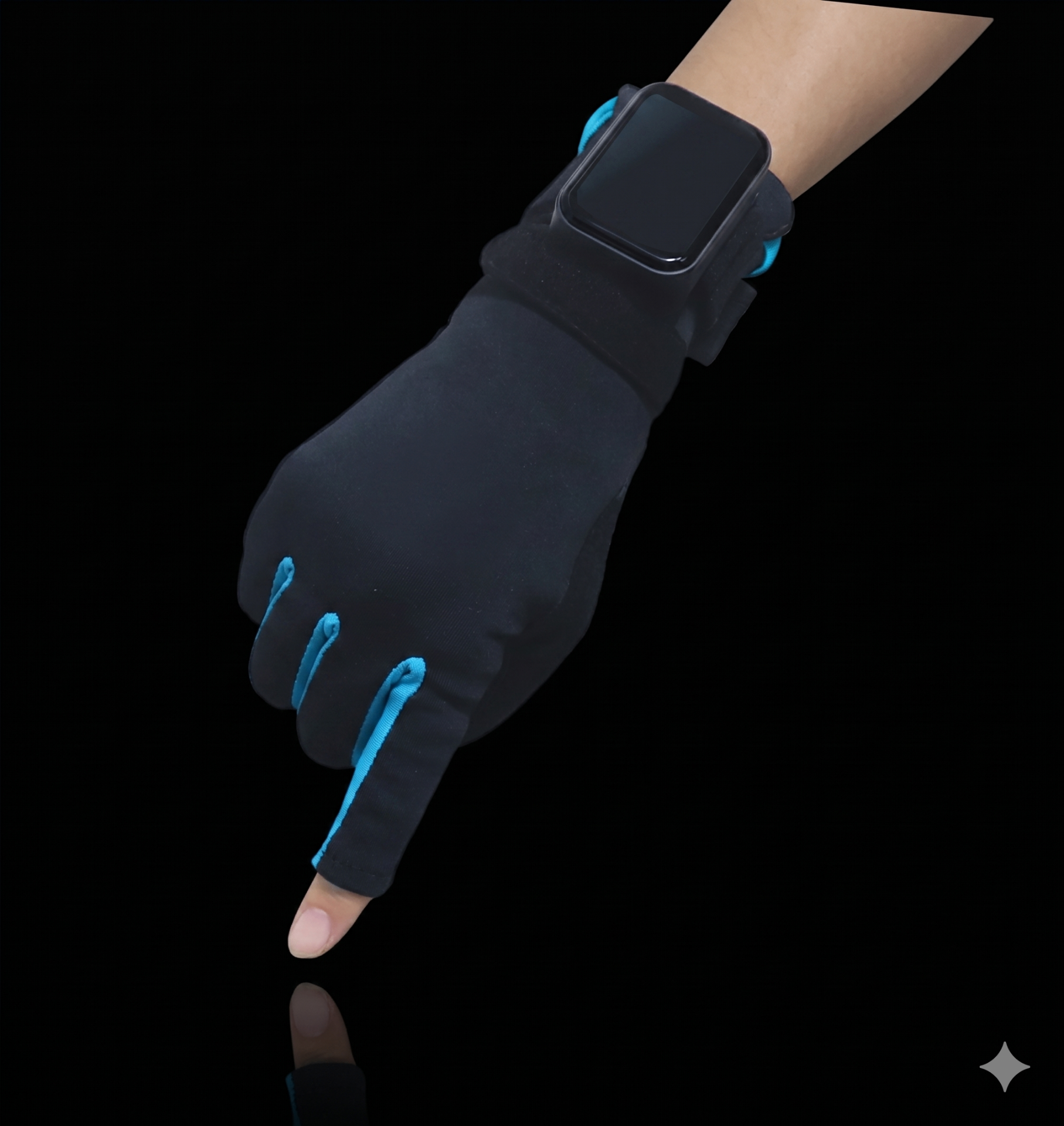
Force is the axis Blomega captures at the fingertip and the axis the public data does not have. A registry of how much force everyday tasks take is the coarse, world-level version of that thesis, assembled from literature; the fine-grained, per-trajectory version is what the GX-1 records during real work. Both say the same thing: the newtons are the missing signal, and whoever holds them holds the part of manipulation that vision will never explain.
Query it and read more
Building or training robots?
We license manipulation datasets and run custom capture programs. Get in touch to see what fits.