
The Tactile and Force Sensor Registry: 24 Ways to Give a Robot Touch
A cleaned, sourced registry of the tactile and force/torque sensors robots use, from open-source GelSight and ReSkin to industrial ATI and Bota. One normalized schema, and a split that tells you where the field is going.
Touch is the sense a robot needs most for contact-rich work and the one hardest to shop for. The sensors are scattered across vendor datasheets, arXiv papers, and lab pages, described in incompatible terms: some report camera pixels, some report taxels, some report six axes of force. We refined twenty-four of them into one schema, so you can finally compare a vision-based GelSight to a magnetic ReSkin to an industrial ATI force/torque cell on the same row. The machine-readable version is at blomegalab.com/data/tactile-force-sensors.json.
Two speeds: an open tactile frontier over a closed force base
The clearest pattern in the data is a split. Every open-source sensor in the registry is a research tactile sensor, GelSight's DIGIT, MIT's GelSlim, Bristol's TacTip, Meta and CMU's ReSkin, NYU's AnySkin and eFlesh, the low-cost 9DTact. Every industrial force/torque sensor, ATI, Robotiq, Bota, OnRobot, and every commercial tactile array, is proprietary and usually quote-only. The frontier of touch is being built in the open by labs; the reliable, calibrated force base is a closed industrial market. A robot builder lives across both.
The registry
Twenty-four sensors, each normalized to the same fields: maker, sensing type, what it senses, resolution, sample rate, output, whether it is open-source, price when public, and year. The full queryable version is the JSON linked below.
- GelSight Mini, GelSight Inc. · vision-based · $499 · 25 Hz · closed
- DIGIT, Meta AI + GelSight · vision-based · ~$15 BOM · open
- DIGIT 360, Meta AI + GelSight · vision-based multimodal · ~8.3M taxels · open · 2024
- GelSlim 3.0, MIT · vision-based · 3D shape + force + slip · open
- TacTip, Bristol Robotics Lab · vision-based (pin) · 3D-printable · open
- 9DTact, vision-based · 3D shape + 6D force · low-cost · open · 2023
- ReSkin, Meta AI + CMU · magnetic · <$6/unit · 400 Hz · open · 2021
- AnySkin, NYU · magnetic · replaceable · open · 2024
- eFlesh, NYU · magnetic · normal+shear force + slip · open · 2025
- ATI Nano17, ATI/Novanta · 6-axis force/torque · up to 7 kHz · quote · closed
- Robotiq FT 300-S, Robotiq · 6-axis F/T · ±300 N/±30 Nm · 100 Hz · ~$5-8k · closed
- Bota Rokubi, Bota Systems · 6-axis F/T + IMU · 1 kHz · quote · closed
- OnRobot HEX-E QC, OnRobot (ex-OptoForce) · 6-axis F/T · ~$5-6k · closed
- SynTouch BioTac SP, SynTouch · multimodal fingertip · force/pressure/temp · closed
- XELA uSkin uSPa 44, XELA Robotics · magnetic · 3-axis per taxel · closed
- Contactile PapillArray, Contactile · optical · 3D force + slip · 1 kHz · closed
- Tekscan I-Scan, Tekscan · piezoresistive array · up to ~1936 sensels · closed
- PaXini PX-6AX GEN3, PaXini · magnetic · up to 15 sensing dims · CES 2026 · closed
How to read it
The registry spans four sensing principles: vision-based tactile sensors that watch an elastomer deform through a camera (GelSight, DIGIT, GelSlim, TacTip, 9DTact); magnetic skins that read a magnetometer under a magnetized elastomer (ReSkin, AnySkin, eFlesh, uSkin, PaXini); optical pillar arrays (Contactile); and strain-gauge or capacitive force/torque cells (ATI, Robotiq, Bota, OnRobot). The honest gaps: sample rate is missing or controller-dependent for a quarter of rows, and most industrial prices are quote-only, so both are flagged rather than guessed. Sparsh, Meta's tactile foundation model, is deliberately excluded because it is a model that runs on these sensors, not a sensor itself.
Why Blomega maps this
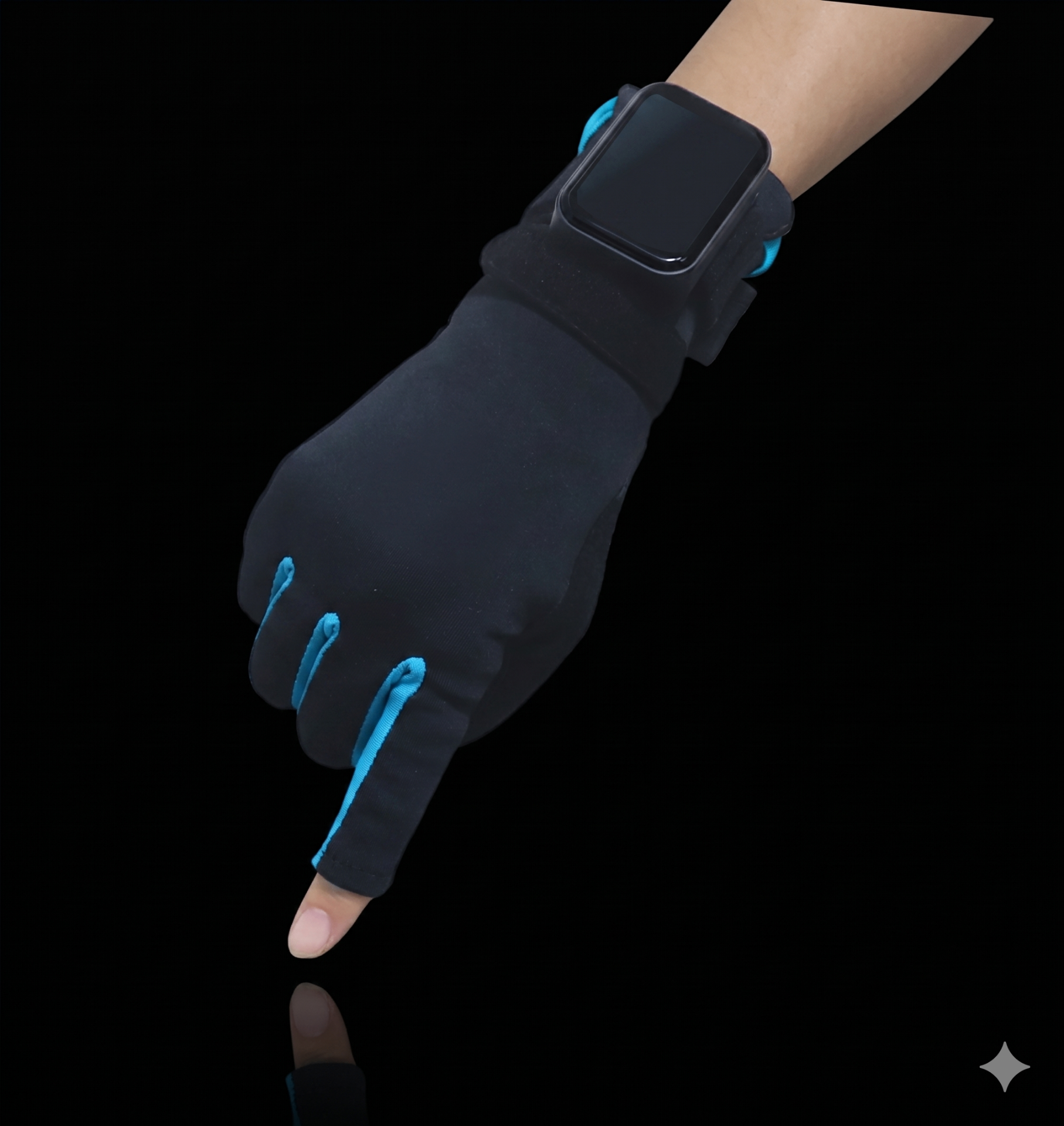
This is the hardware side of the force gap. The dataset registry showed that almost no training data carries force; this registry shows the instruments that produce it, and that they are either research prototypes or expensive industrial cells, not something wired into a wearable capturing real human work. That space, force sensing on the hand, during real tasks, at data-collection scale, is where Blomega's GX-1 sits. Mapping the sensor landscape is how you see the shape of the hole.
Query it and read more
Building or training robots?
We license manipulation datasets and run custom capture programs. Get in touch to see what fits.