Wireless, Battery-Powered, All-Day: The Full-Body Capture Spec
A suit that only works tethered, in a studio, for thirty minutes at a time captures a fraction of the work that matters. The full-body capture spec is what unlocks the rest.
Motion capture is not a new field. Film studios have been using tethered optical mocap for decades. What is new is the requirement that the capture stack work outside a studio, on a wireless budget, for a full working day, on an operator who is doing real work, not walking a T-pose in a black bodysuit under studio lights.
The gap between studio mocap and field-ready capture is the entire reason inertial-sensor suits exist, and it is the specification that decides whether a wearable-first data program is actually deployable.
What 'field-ready' actually means
It means the suit fits over normal work clothes. It means the sensors are wireless and stay time-synchronized across a full-body distribution. It means the battery lasts a real shift, six to eight hours, not thirty minutes. It means the fit stays calibrated when the operator sweats, when they crouch, when they crawl under a workbench. It means no external cameras are required, because the workspace is not going to be instrumented for you.
Why this is the specification for the suit and the straps
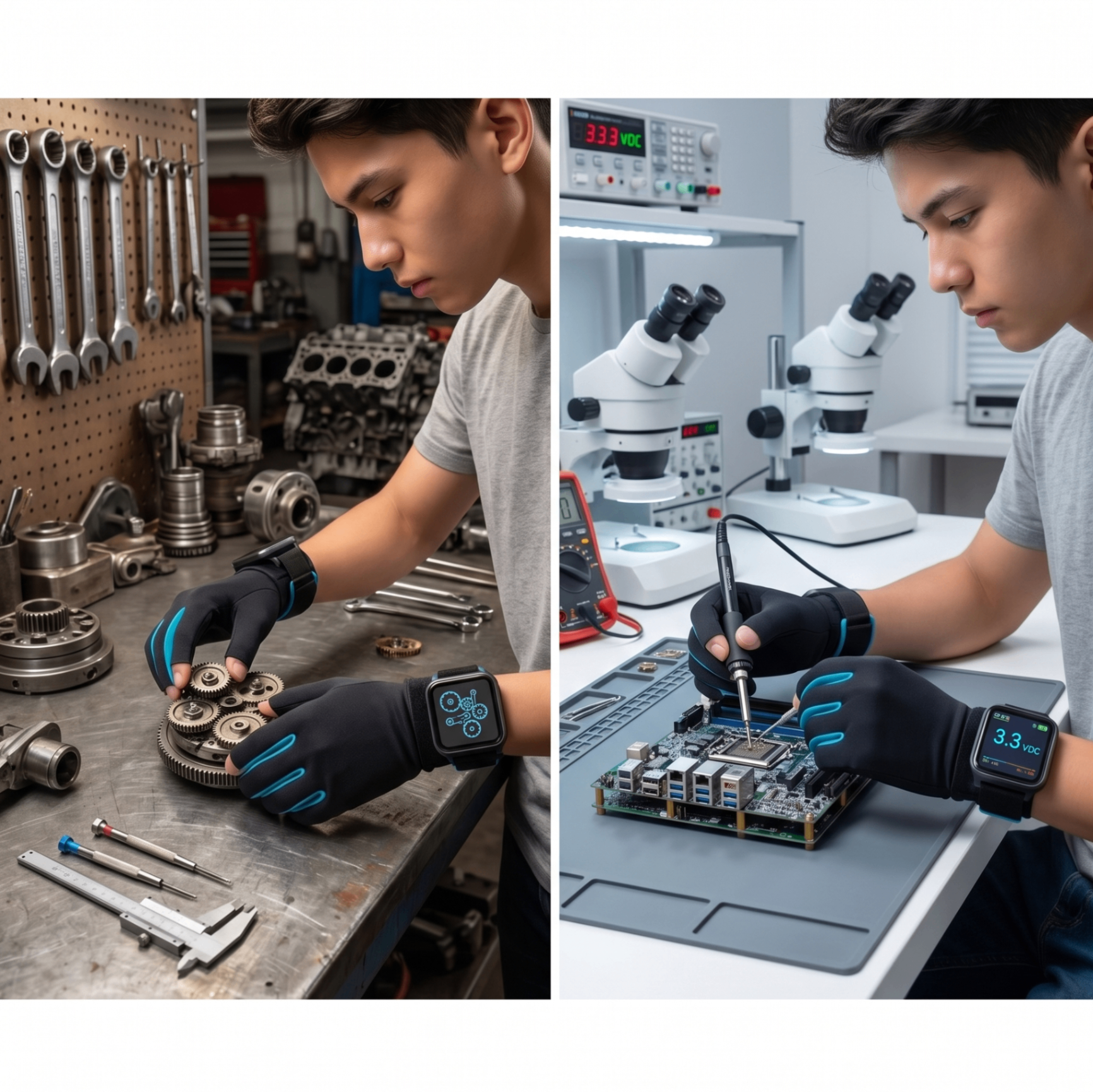
Not every operator needs a full suit. A cook working at a bench needs the glove and the head-mounted rig, not the leg segments. A machinist doing under-the-counter work needs the strap set on the arms and the glove, not the full-body IMU array. Modularity is part of the field-ready spec, the operator wears exactly what the task requires and nothing more.
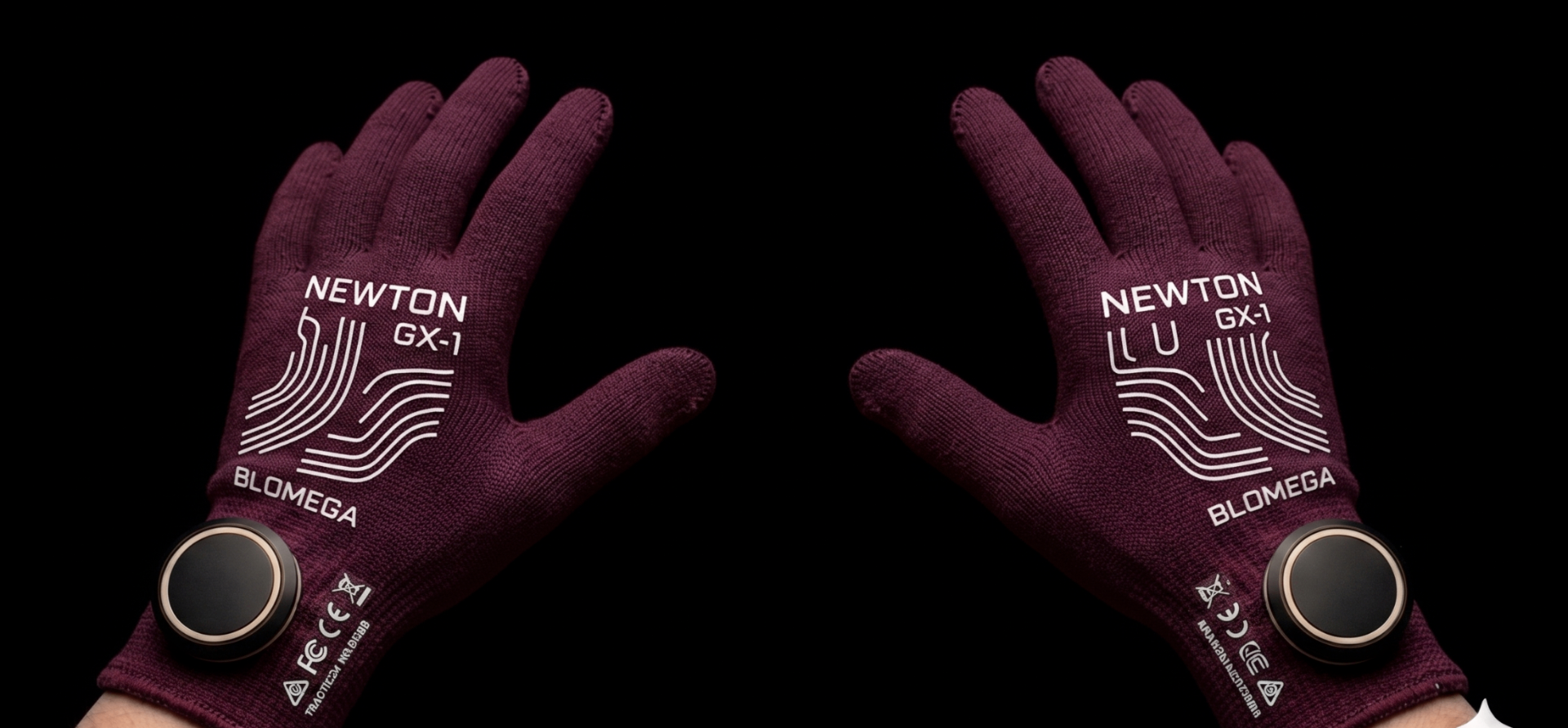
This is why the BLO LAB stack ships as a suit, a glove, and a strap set that share the same wireless base and the same time-sync protocol. The customer chooses the combination that matches the task, and the same data pipeline ingests all of them.
Building or training robots?
We license manipulation datasets and run custom capture programs. Get in touch to see what fits.