Inside the Glove: The Sensors Behind GX-1
A hardware tour of the honest v1 capture glove: 10 bend channels, fingertip force on three fingers, and a 6-axis wrist IMU, all 100 Hz hardware-synced.
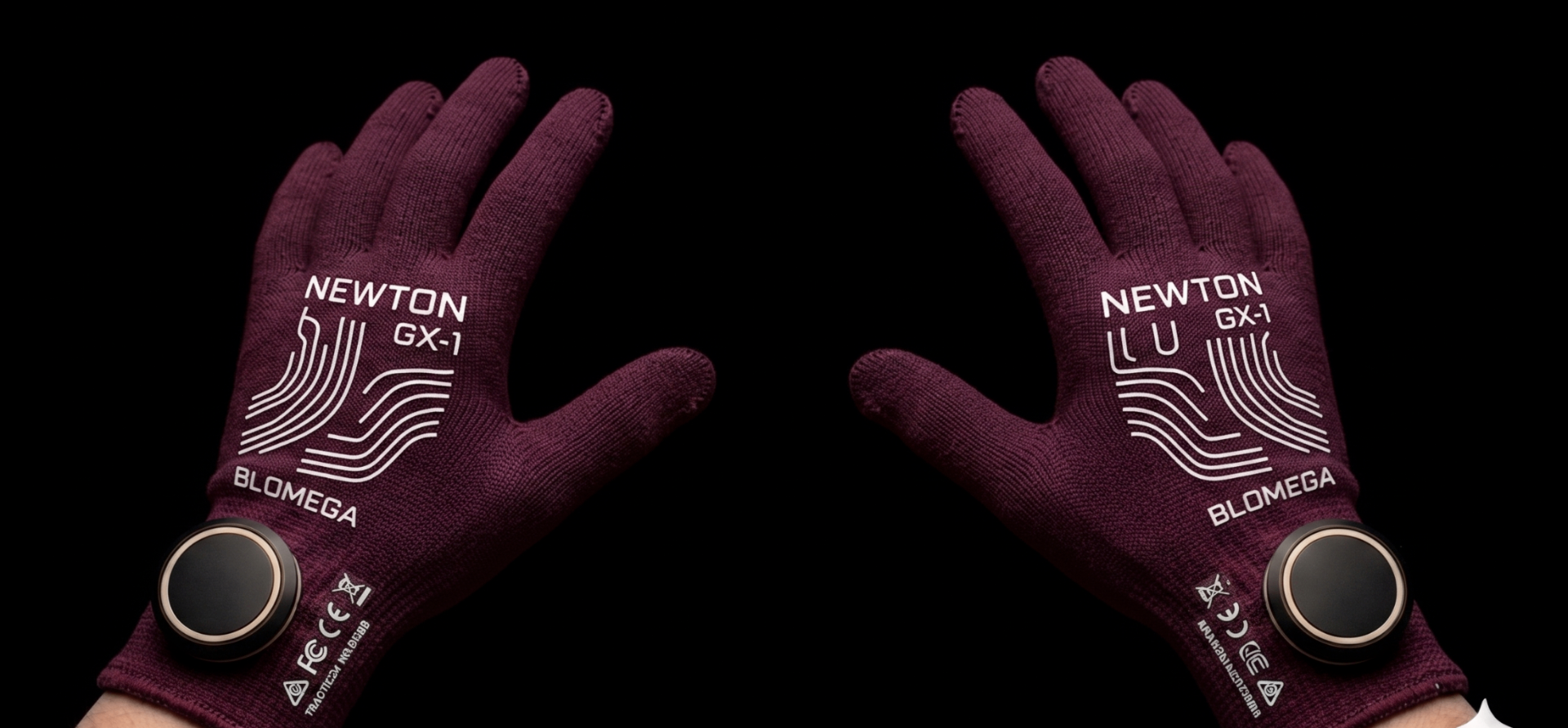
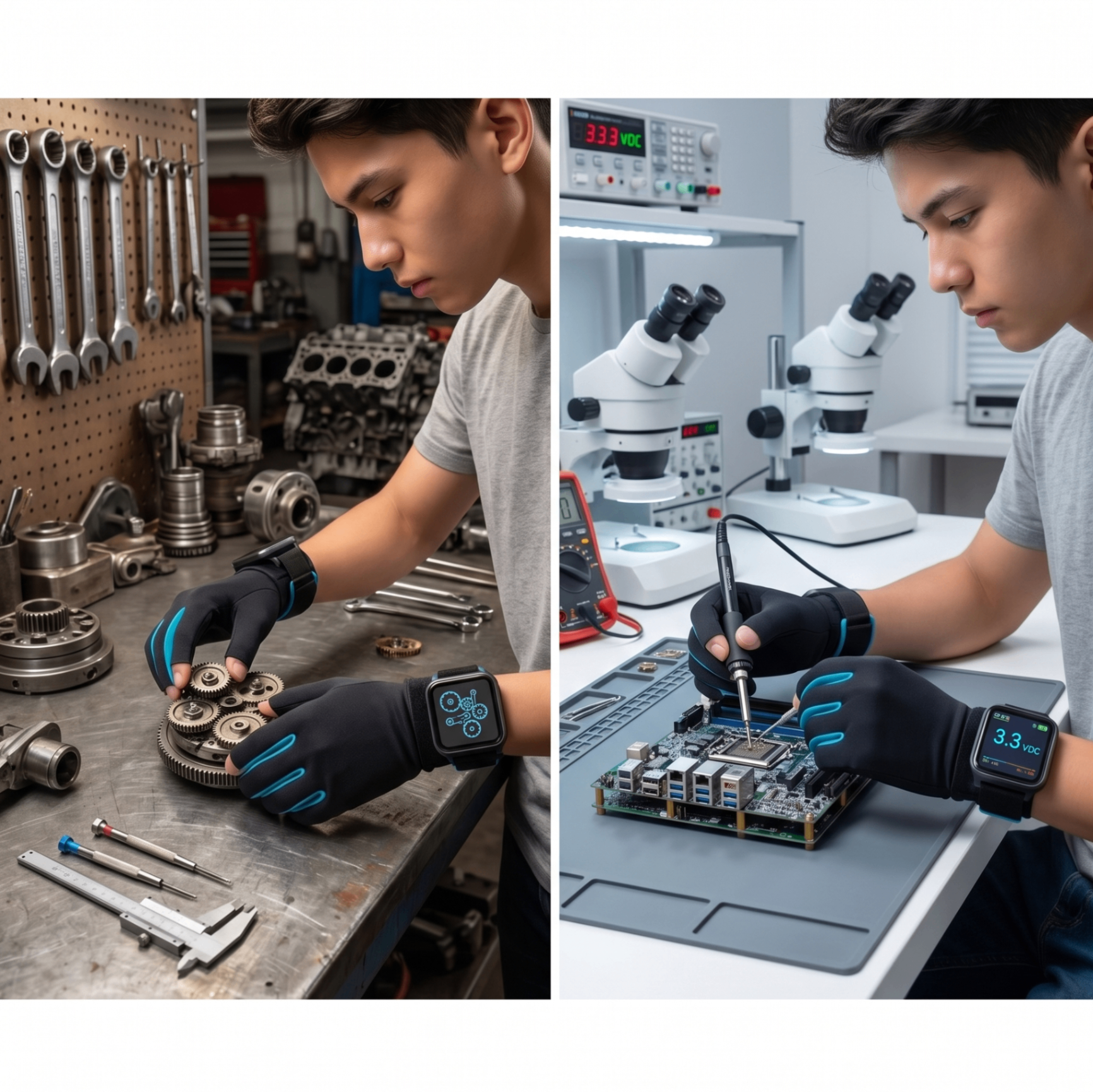
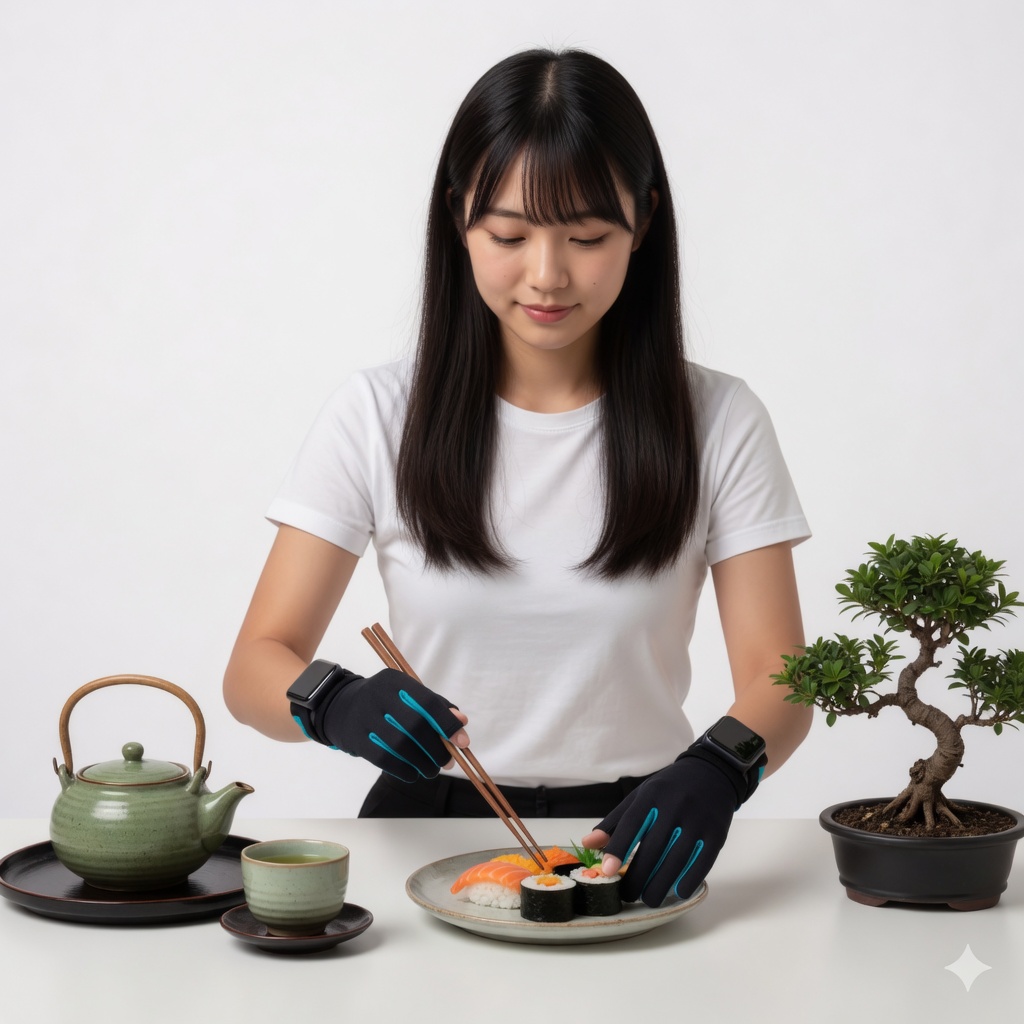
The GX-1 is deceptively simple looking. Black stretch fabric, teal accents at the fingertips, no visible wires. It is not the densest sensor package ever put on a hand, that is not the point. The point is a spec you can actually ship at scale, calibrate reliably, and stream into a training pipeline without ceremony.
What v1 deliberately is not: no haptic feedback, no EMG, no medical certification. We ship the raw, timestamped channels your ML team actually trains on, and nothing that inflates the price of a fleet.
Finger tracking, 10 bend channels
Two joints per finger, five fingers, ten channels total. Optical bend sensors, not resistive, which matters because optical bend sensors do not drift with temperature or with the salt in an operator's sweat over a long capture day. Sampling runs at 100 Hz on all channels, hardware-synced across the glove and the wrist.
Ten channels is not a full anatomical hand model. It is the smallest number that reliably reconstructs the finger poses a manipulation policy needs to learn from. Higher channel counts and palm sensing are on the GX roadmap, driven by what design partners actually ask for, in that order.
Grip force, fingertip pads on thumb, index, middle
Three fingertips carry a capacitive force pad measuring normal pressure from a whisper (a few grams) to a firm pinch (several kilograms). Thumb, index, and middle, the three fingers that close on almost every real grasp. The sensing element sits behind a thin protective silicone layer that is grippy enough for everyday tasks and washable enough to survive real use.
The pads are individually calibrated at manufacture and again by the operator on first use, using a short routine that presses the fingers against a reference surface. This is the difference between force numbers that a policy can actually consume and force numbers that are directionally correct but quantitatively unusable.
Wrist motion, 6-axis IMU
A 6-axis IMU at the back of the wrist resolves hand trajectory and orientation independently of the vision system. That redundancy is what lets the glove work in a bag, in a pocket, under a table, anywhere a camera cannot see.
Wireless and washable
The electronics module, a snap-out wrist puck, detaches magnetically. The textile liner (30–40 g total) goes in a mesh laundry bag and into a normal washing machine, and survives 50+ wash cycles. Battery runs 8+ hours at full sampling; charging is magnetic while stored.
Field operators can capture for a full shift on a single charge, hand off to the next shift, and expect the same glove to still be reporting clean data months into daily use. Every capture partner we have worked with had a prior generation of glove that broke within weeks of real use. Building for a lab and building for a distributed operator network are different engineering problems.
What it plugs into
The glove streams over BLE to the operator's capture app, with on-device logging and burst sync as a fallback when the link drops. Hardware clock, video-sync capable. The output is a single time-locked trajectory ready for the training pipeline. No manual sync, no post-hoc alignment, no ceremony.
Design-partner units ship Q4 2026. Production 2027.
Building or training robots?
We license manipulation datasets and run custom capture programs. Get in touch to see what fits.