Anatomy of a Motion-Capture Suit for Robotics (Roadmap)
What a robotics-first mocap suit should look like, and why we're shipping the glove first. A design brief, not a datasheet.
Note: a full-body suit is on the BLO roadmap, not on shelves. The glove ships first. This piece describes the design brief we've written for a robotics-first suit, what it needs to be, and why the existing options are not it. We won't market suit hardware until it's real.
Film mocap suits are designed to look good on a stage. Robotics mocap suits are designed to produce data a policy can consume. The requirements overlap only partly, and the differences run deep enough that trying to use a film suit for robotics, as many teams have, turns into a year-long integration project.
Sensor placement
A robotics-first suit places IMU nodes along the kinematic chain: spine, shoulders, upper arms, forearms, wrists, hips, thighs, shins, feet, and head. Nodes should cluster around the joints most relevant to manipulation and locomotion, with denser coverage on the upper body because that is where the interesting task variation lives. A film suit distributes evenly for silhouette quality. A robotics suit concentrates where the policy needs signal.
No camera required
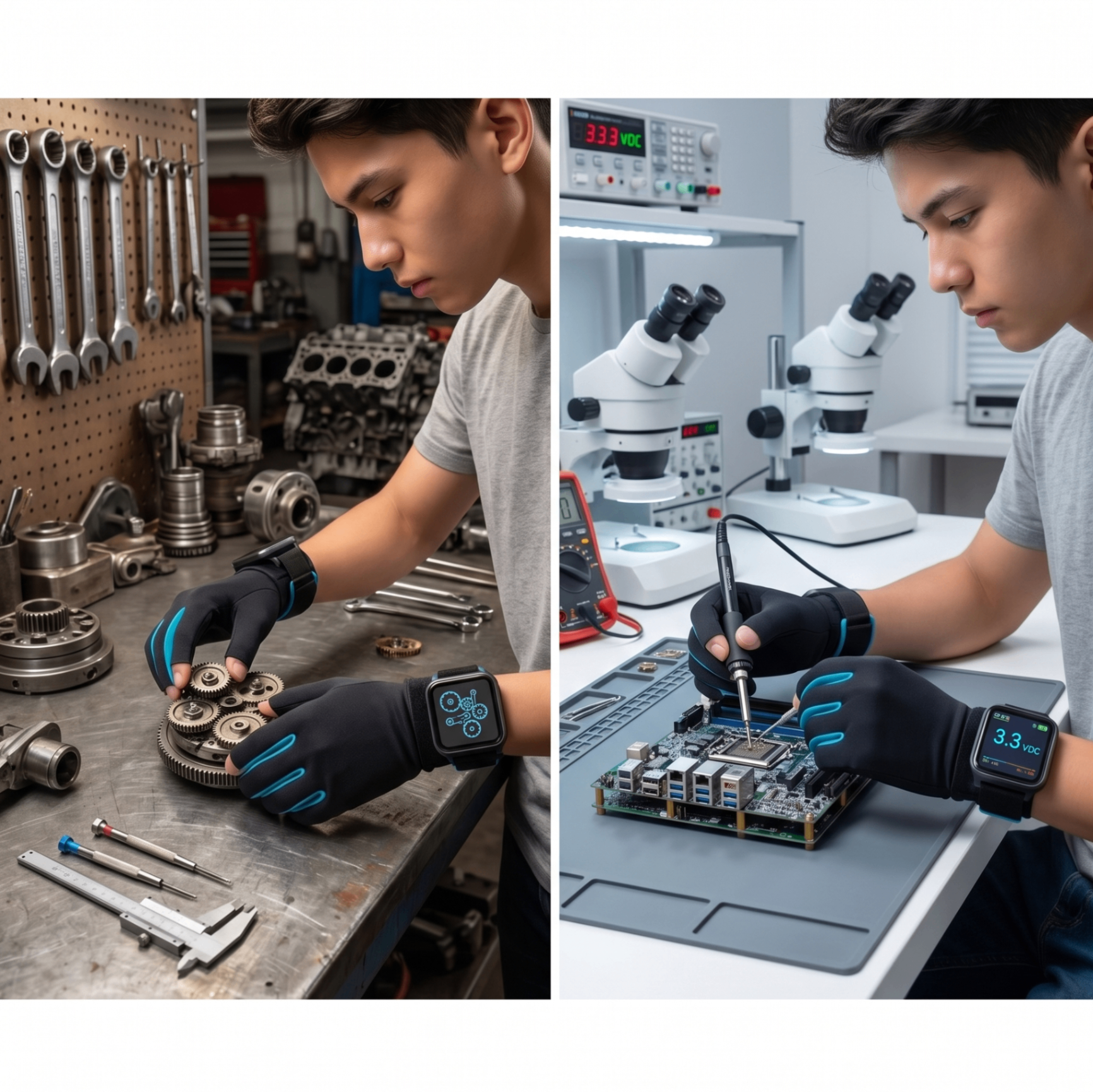
Unlike optical mocap, an IMU suit does not need a studio, markers, or line-of-sight to a fixed camera rig. Operators work in a kitchen, a workshop, a factory floor, a car, anywhere they might actually do the task the robot will one day take over. This is critical. The whole point of capturing manipulation data is that it generalizes to real environments, and real environments are not studios.
Drift and how to kill it
IMU-only motion capture is famously prone to drift; small orientation errors integrate over minutes into large position errors. Any serious suit has to mitigate drift with a combination of magnetometer cross-referencing, foot-contact detection to periodically zero the ground plane, and an optional wrist-camera anchor when the operator uses one.
Time-locked with the glove and headband
A shared wireless clock has to keep the suit, the glove, and the headband camera within a millisecond of each other. That precision is what makes fused whole-body trajectories usable for training. A ten-millisecond offset between the hand and the arm teaches a policy that the hand moves before the arm does, which is subtly wrong in a way that never quite trains out.
Comfort for eight hours
An operator who cannot wear the suit comfortably for a full shift is an operator who captures at 60% duty cycle. Breathable mesh panels over the torso, replaceable pads at the joints, cable routing that does not catch on itself when the operator raises an arm. It sounds like a small point. In practice it is the difference between a capture partner who ships and one who quits.
Why the glove ships first
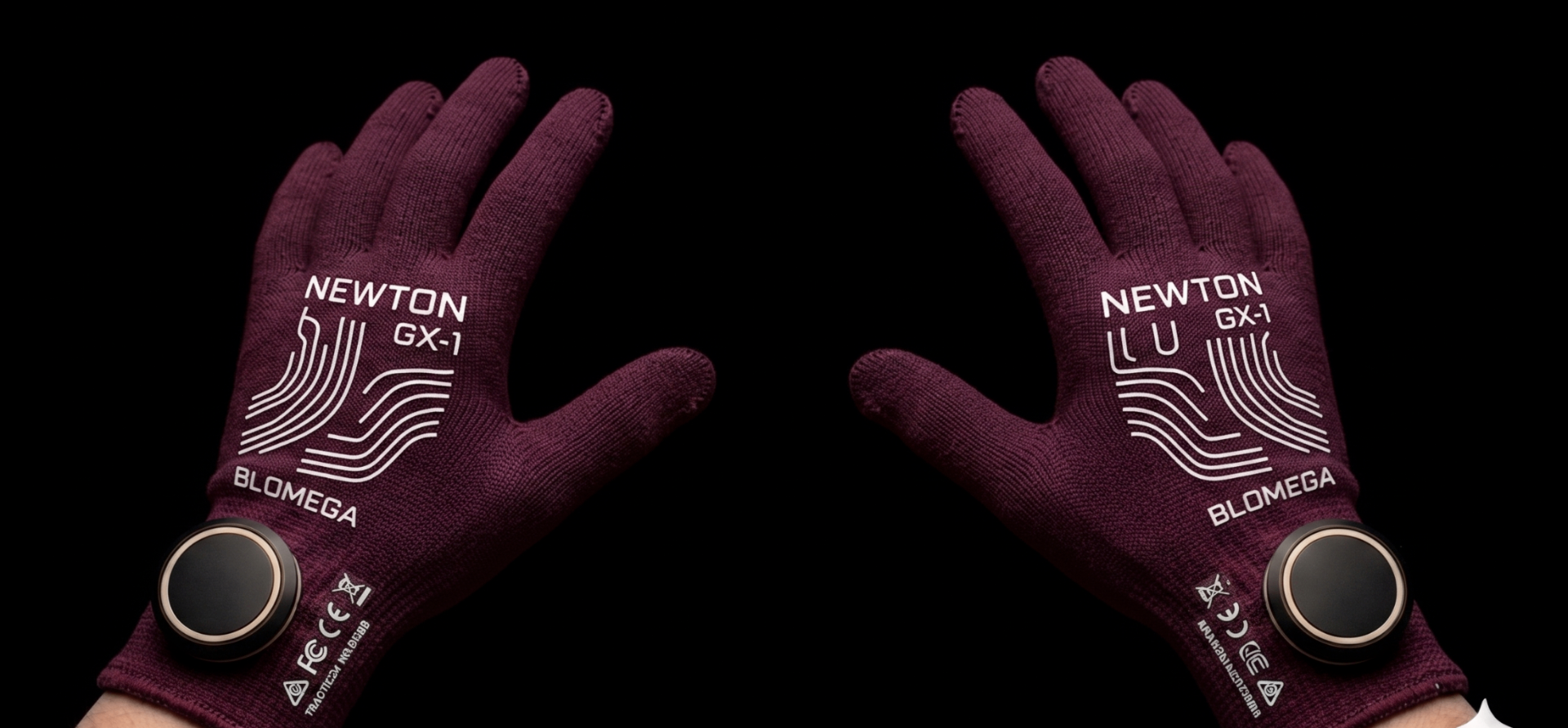
The scarce modality is force, not pose. Whole-body pose can be reconstructed reasonably well from multi-view video and a wrist IMU; fingertip force cannot be reconstructed from anything a camera sees. The GX-1 glove gets that scarce signal into the pipeline now. The suit follows when the design brief above becomes hardware, and not before.
Building or training robots?
We license manipulation datasets and run custom capture programs. Get in touch to see what fits.