Slip Detection in Robot Grasping: A Field Primer
Slip is the physical event that decides whether a robot keeps hold of what it picked up. A working guide to how the field detects it, why traditional methods break, and what a modern slip-aware policy looks like.
The moment a robot picks something up, one of two things happens next. Either the friction cone at the contact patch remains large enough to hold the object against gravity, inertia, and external forces, or it does not, and the object begins to move relative to the fingers. That relative motion is slip, and detecting it, ideally before it becomes catastrophic, is the difference between a robot that can handle the world and a robot that drops things.
Slip detection has been studied for four decades. It is unglamorous. It is also one of the most direct differentiators between policies that ship and policies that demo.
What slip actually is
Physically, slip is relative motion between two surfaces in contact. In robotic grasping, the interesting distinction is between incipient slip and gross slip. Incipient slip is when part of the contact patch has begun to move while another part is still stationary, the leading edge of a failure that has not yet compounded. Gross slip is when the entire contact patch is in motion and the object is being lost.
The two events have very different signatures and very different responses. Gross slip is easy to detect and often too late to correct. Incipient slip is subtle, contains a large fraction of a second of warning, and is exactly the signal a well-designed grasp controller can act on to prevent the drop.
How the field has tried to detect it
Classical methods rely on vibration. When a surface begins to slip against a fingertip, high-frequency vibrations propagate through the sensor. Piezoelectric or accelerometer-based fingertips detect these vibrations reliably in controlled conditions and unreliably in the presence of the machine and environmental vibrations that real robots operate in.
Vision-tactile methods use image differences. A GelSight or DIGIT frame shows the contact patch, and comparing frames over time reveals sub-pixel motion of the surface texture that precedes macroscopic slip. This works well and gives a large temporal warning, at the cost of the hardware constraints discussed earlier in this series.
Force-derivative methods watch the shape of the fingertip force signal itself. The moment a grasp begins to lose friction, the shear force rate changes in a characteristic way. A policy or a small classifier reading a high-rate force stream can learn to recognize the shape and preempt the failure.
None of these methods are new. What is new is the availability of large enough datasets to train slip detectors that generalize across objects, materials, and grasps rather than being calibrated to a specific benchmark.
Why slip detection has stayed unsolved at scale
The bottleneck has been labeled data. Slip is easy to define in a physics textbook and hard to label in a video. Annotators watching third-person footage cannot reliably identify incipient slip because the visual cue is often absent. Annotators watching first-person video from a wrist camera do better but still miss the sub-second window that matters.
The result is that most slip-detection work has trained on synthetic slip events, hand-designed benchmarks, or small carefully-collected datasets. Each of these produces detectors that work on their training distribution and struggle in the wild. Real slip in a working environment is more varied, more subtle, and more frequent than any small labeled set contains.
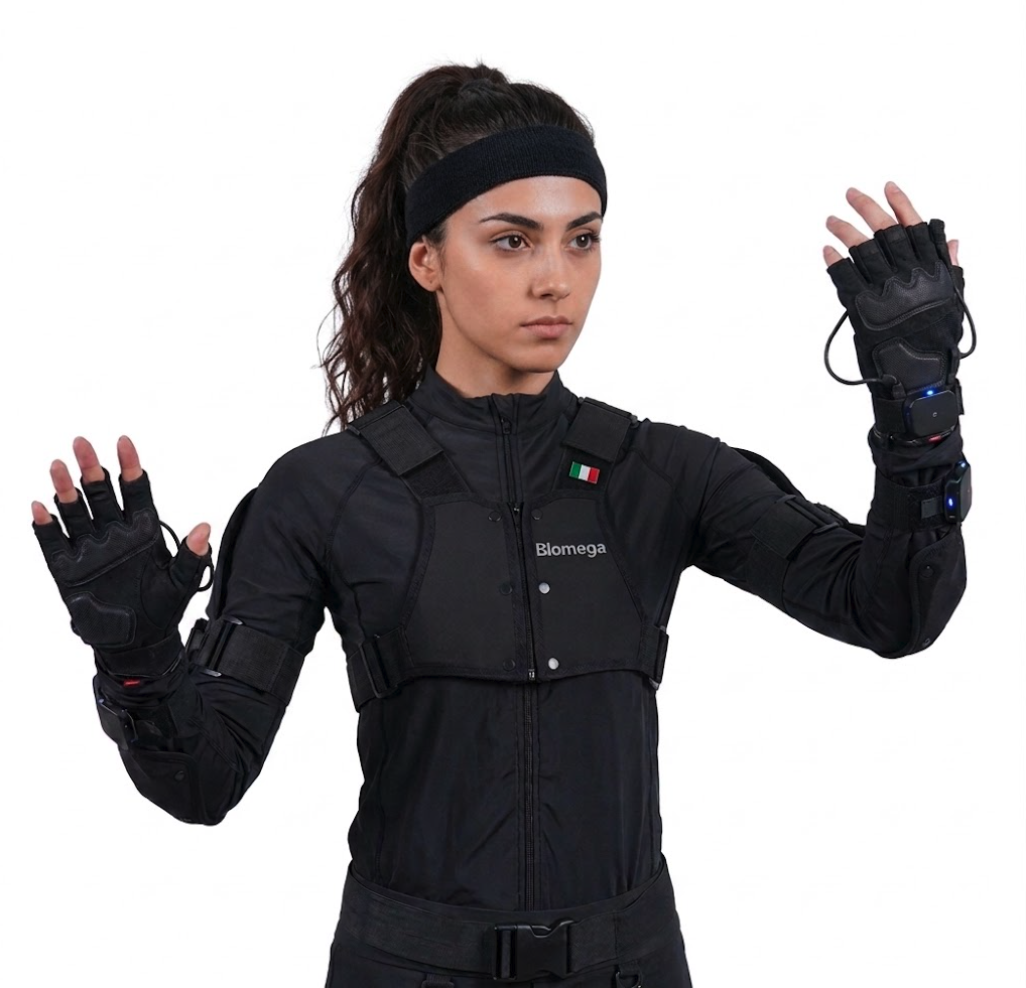
The way out of this is not better annotators. It is better sensing at capture time. If the training data itself contains a high-rate force signal, slip events are labeled by physics, the sensor reads slip whether the annotator noticed or not. That is the shift in what training data looks like that is finally moving slip detection out of the special-case bucket and into the standard grasp-policy stack.
What a slip-aware policy looks like
It looks, from the outside, unremarkable. It closes on objects, holds them, sets them down. What is different is what happens in the moments the failure would otherwise start. The policy adjusts grip force in the first hundred milliseconds after contact based on the observed force profile. It preemptively tightens when the shear signature shifts. It re-grips rather than continues when a micro-slip crosses a threshold, and the re-grip is not a scripted recovery but a learned behavior from thousands of demonstrations where the operator did the same thing.
The next piece takes the specific complaint that this behavior is rare and traces it back to the data that no one is collecting.
Building or training robots?
We license manipulation datasets and run custom capture programs. Get in touch to see what fits.