
Simulation Cannot Fake a Contact Event
High-fidelity simulators have become impressive enough that some teams argue real-world capture is optional. For dexterous manipulation, the argument breaks the moment two surfaces touch.
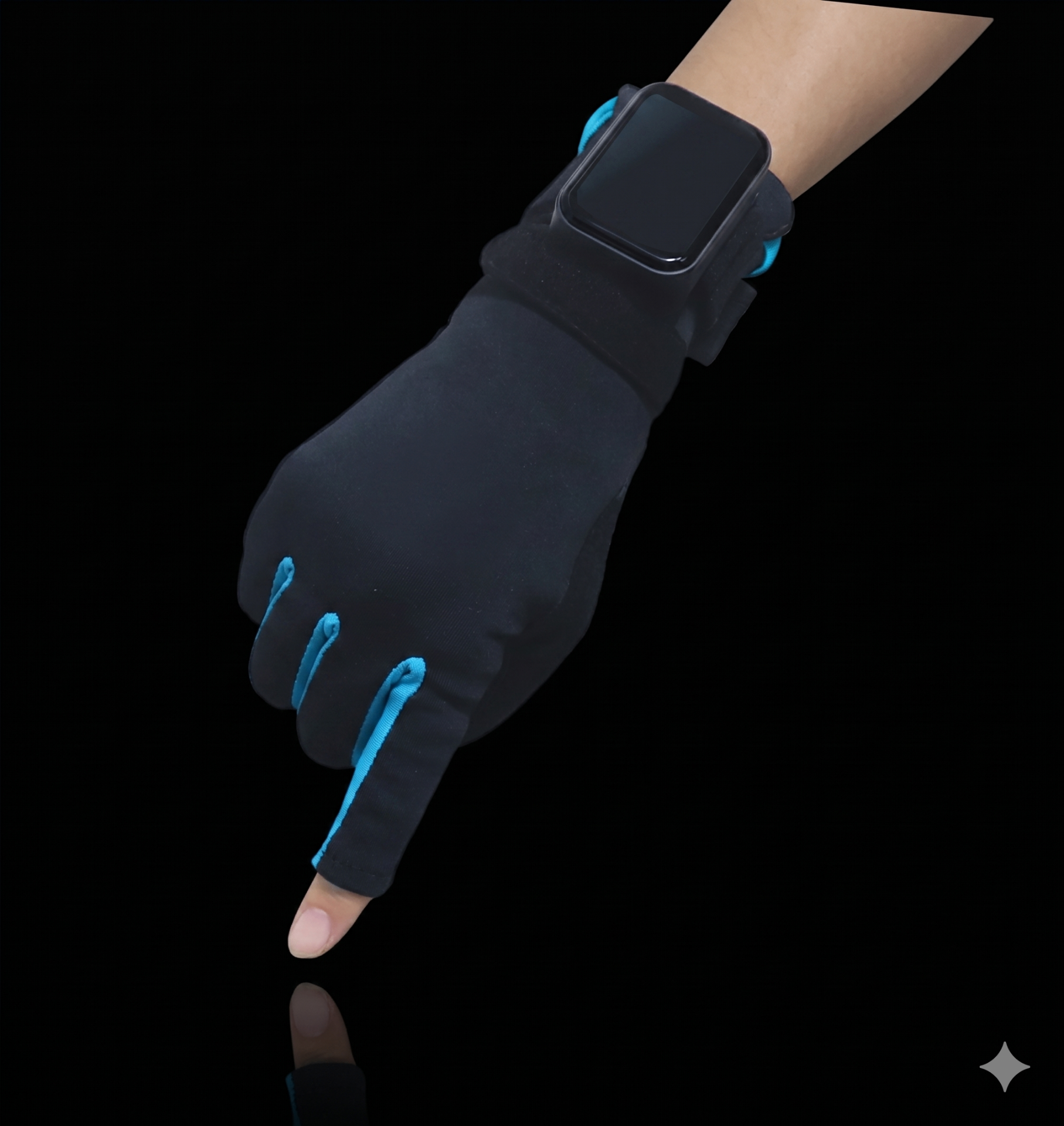
The simulator-first pitch is seductive. Spin up a million parallel environments, run a policy overnight, get a robot that works. It has produced real wins in locomotion, in navigation, and in some pick-and-place. Genesis AI itself grew out of a well-regarded open-source simulation project before pivoting into a full-stack model company, a fact that makes their subsequent investment in a physical glove and hand more telling, not less.
The reason the strongest simulation labs still build real-world capture stacks is not that simulation is bad. It is that simulation cannot fake a contact event. And dexterity is contact events, all the way down.
Where simulation works and where it does not
Simulation is excellent for rigid-body dynamics with large contact patches and predictable friction. A quadruped walking on flat ground, a wheeled robot navigating a warehouse, an arm swinging through free space, these are well-modeled and the sim-to-real gap is manageable.
Simulation is bad for the physics that dexterity depends on: deformable objects, thin films, high-frequency stick-slip, cloth, granular media, liquid, and the moment a fingertip touches a surface at a shallow angle. The equations exist; the tuning to match reality does not, and even when it does it does not generalize past the specific setup it was tuned for. Anyone who has watched a simulated hand try to fold a shirt has seen the failure mode: the cloth behaves like a rigid sheet, or a jelly, or something with negative gravity, and no amount of parameter sweeping produces something that transfers.
The hybrid stack that actually ships
The current best practice at the frontier is not simulation-only and not real-only. It is a stack where simulation carries the load for the parts of a task that are well-modeled, reaching, gross positioning, obstacle avoidance, and real-world capture carries the load for the parts that are not: the last centimeter, the grip force, the recovery from a slip, the moment the whisk starts to lift the egg out of the bowl.
This is why full-stack labs invest in both. Genesis AI's data engine leans heavily on simulation for scale, and on their glove and hand for the parts where simulation cannot follow. A team doing only one of the two is leaving performance on the table that the other side will collect.
The economics of contact data
Contact-rich data is the most expensive kind to collect and the most valuable per hour. A minute of a skilled operator kneading dough with an instrumented glove produces training signal that no amount of overnight simulation can substitute for. The scarce input in the industry is that minute, the operator, the glove, the QA pipeline that catches a dropped force channel before it poisons a batch.
The teams that recognize this early build their capture pipeline before they need it. The teams that recognize it late spend a quarter waiting for data while their model plateaus. There are not many other industry inputs where the leverage on model quality is this direct.
Building or training robots?
We license manipulation datasets and run custom capture programs. Get in touch to see what fits.