Open Developer Ecosystems for Robotics: A Technical and Commercial Field Guide (2026)
A deep reference on what an open developer ecosystem for robotics actually is in 2026: the middleware, simulation, data, and model layers; the business models and robot app stores; the open-versus-closed data-moat tension; and what has to be true for an iOS or Android moment in physical robots.
An open developer ecosystem for robotics is the stack that lets third parties, not just the robot maker, build the applications a robot runs: shared middleware (ROS 2), open simulation, a common data format and dataset hub (LeRobot, Open X-Embodiment), open foundation models (GR00T, OpenVLA, pi0), and neutral tooling (Foxglove and the MCAP log format). By 2026 every layer exists in open form, app stores for robots have gone live, and the real question is no longer whether the software can be open, but whether the layer that actually holds the value, the data, will be. This guide maps the whole stack, technically and commercially, and states plainly what still has to be true for a genuine developer ecosystem to form around physical robots.
Why 2026 is the inflection
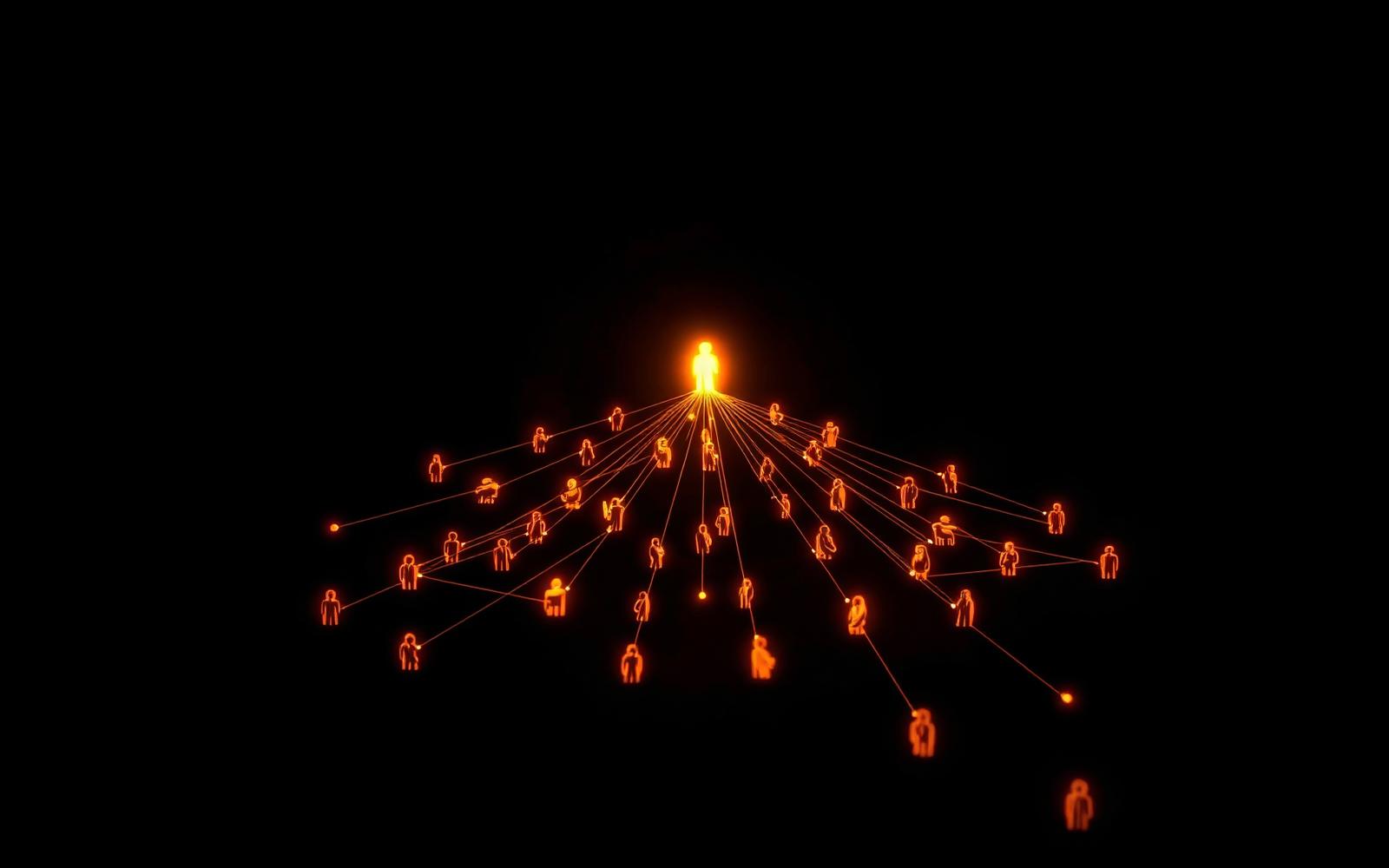
The framing everyone is working from is iOS and Android for physical robots: a hardware-plus-software platform stable enough that outside developers build the skills, instead of the robot maker building all of them. What changed in 2026 is that the analogy stopped being hypothetical. Robot app stores went live within months of each other: Unitree's UniStore opened in May 2026 with a reported 1,200-plus developers and around 237 apps; OpenMind launched a cross-manufacturer store reporting 1,000-plus developers; and Hugging Face shipped a Reachy Mini app store with 200-plus community apps. Foxglove, whose Actuate conference hosts this topic, frames the moment bluntly: physical AI is no longer a research horizon, it is shipping.
The rest of this guide is organized as a stack. Each layer has an open incumbent, a set of trade-offs, and a commercial reality. The diagram below is the map.
Layer 1: Middleware and control (ROS 2)
ROS 2 is the neutral commons the ecosystem stands on. Its model is four communication primitives, topics for asynchronous publish and subscribe, services for request and response, actions for long-running goals with feedback and cancellation, and parameters for configuration, layered over a middleware abstraction called rmw. That abstraction is why ROS 2 is not locked to one transport: the default is eProsima Fast DDS, with Eclipse Cyclone DDS and the commercial RTI Connext as alternatives, and Eclipse Zenoh emerging as a non-DDS option better suited to fleets and wide-area networks. Real-time control runs through ros2_control, whose controller manager cleanly separates controllers from hardware drivers via typed state and command interfaces.
The governance is as important as the code. In December 2022 Alphabet's Intrinsic acquired the for-profit Open Source Robotics Corporation, while the nonprofit Open Source Robotics Foundation kept ROS, Gazebo, and Open-RMF. To prevent exactly the neutrality fears that acquisition raised, the Open Source Robotics Alliance was formed in March 2024 with a Linux-Foundation-style membership model; its platinum members include NVIDIA, Intrinsic, and Qualcomm. Keeping the commons neutral, and being seen to, is a live political problem, not a solved one.
Layer 2: Simulation and sim-to-real
Training moved to massively parallel GPU simulation. NVIDIA's Isaac Sim 5.0 and Isaac Lab 2.2 reached general availability at SIGGRAPH 2025 and the Isaac-specific extensions were open-sourced under Apache 2.0, though parts of the underlying Omniverse Kit remain closed, so it is best described as an open app on a partly proprietary runtime. Google DeepMind's MuJoCo, long the standard for contact-rich dynamics, now has a GPU build, MuJoCo-Warp, and both feed Newton, an open GPU physics engine from NVIDIA, DeepMind, and Disney that was contributed to the Linux Foundation in late 2025. Genesis is a newer cross-vendor GPU simulator making aggressive speed claims that should be read as project-reported until independently reproduced. Gazebo, from the ROS foundation, remains the open workhorse, now on its Jetty LTS.
The recurring pattern is the same across all of them: train a policy across thousands of randomized parallel environments, then deploy the frozen policy to hardware through ROS 2. The open interchange bet underneath is OpenUSD for scenes and assets, which is slowly reducing the cost of moving between simulators.
Layer 3: The data format and hub
If ROS 2 is the commons, LeRobot is becoming the data commons. Hugging Face's LeRobotDataset format stores high-frequency signals in Apache Parquet and camera streams as MP4 with JSON metadata, and as of September 2025 the hub carried more than 16,000 datasets from over 2,200 contributors, with a v3.0 format built for datasets of millions of episodes. Its counterpart in the TensorFlow world is Open X-Embodiment, the pooled real-robot dataset of more than one million trajectories across 22 embodiments, serialized in the RLDS format and used to train the RT-1-X and RT-2-X models.
These two formats are the container war covered in our companion piece on RLDS versus LeRobot. For a developer, the practical takeaway is that a standard, self-describing dataset format is the on-ramp: cheap teleoperation hardware plus a hub-native format is why most open models now ship LeRobot loaders.
Layer 4: Open foundation models, the app runtime
The application layer of a robot is increasingly a model, not a program. The open options are real: Octo and OpenVLA (a 7B vision-language-action model) ship weights, code, and data recipes; Physical Intelligence open-sourced the weights of pi0 through its openpi release; and NVIDIA's GR00T N1 line ships open weights, with GR00T 1.7 released as an Apache-2.0, commercially usable VLA. These are dual-system designs, a deliberate vision-language module over a fast diffusion-transformer motor policy, and they are explicitly positioned as the shared substrate that third-party skills fine-tune on top of.
The most striking 2026 result sits outside the open set. DYNA-2, from Dyna Robotics, was pre-trained on more than one million hours of egocentric human video and demonstrated the first human-to-robot transfer scaling law, yet it ships with no public checkpoint, API, or license. That contrast, the headline scaling result being closed while the ecosystem around it is open, is the central tension of the year, and we return to it below.
Layer 5: Observability and the data-longevity problem
Robot data outlives the code that produced it, and teams span ROS and non-ROS stacks, so a neutral, durable log format is foundational infrastructure. That format is MCAP: an append-only, serialization-agnostic container that embeds its own message schemas, so a file recorded today remains readable after the code and message definitions have changed. It holds ROS 1, ROS 2, Protobuf, JSON, and more in one file, and since ROS 2 Iron in May 2023 it has been the default rosbag2 recording format.
Foxglove builds the tooling on top: a multi-panel visualization and observability app for live debugging and fleet-scale log analysis, serving a reported 10,000-plus developers, with an SDK across C++, Python, Go, Swift, and TypeScript. Foxglove is itself a case study in the open-tooling pole of this debate, a vendor-neutral layer beneath everyone's stack, which is exactly why it is a fitting host for a conversation about open ecosystems.
Layer 6: The agent interface and the API to the physical world
Above the model sits the newest and least settled layer: how agents and developers address the robot. Two patterns are competing to become the interface. The first is the Model Context Protocol, applied to robotics by exposing a robot's sensors, actuators, navigation, and manipulation stack as MCP tools that any language-model agent can discover and invoke, typically bridged through ROS. The second is the vision-language-action model itself as the app, where a skill is a fine-tuned policy rather than conventional code.
1X Technologies has given this layer its sharpest slogan. In July 2026 it unveiled a 25-degree-of-freedom tendon-driven NEO hand and described it, in its own words, as an API to the physical world: force-controlled, backdrivable, with tactile fingertips. The platform framing, the body as a programmable substrate and downstream tasks as apps, is the clearest statement of the ecosystem thesis from a humanoid maker. 1X's onboard model, Redwood, a roughly 160-million-parameter vision-language transformer running on the robot rather than the cloud, is the foundation any developer skill would sit on.
The commercial layer: how open robotics ecosystems make money
Open ecosystems do not monetize the open bits; they capture value at adjacent layers. Six patterns are visible in 2026. Open-core sells a paid pro tier over a free library, as PickNik does with MoveIt Pro over open MoveIt. Managed platforms monetize hosting and data, the Hugging Face model, and Foxglove applied to robot observability. Hardware bundles give away the SDK and sell the robot, as with Hugging Face's Reachy Mini at 299 to 449 dollars, the Apache-licensed Reachy 2 near 70,000 dollars, and Unitree's G1, which is roughly 13,500 dollars as a locked base unit but from about 43,900 dollars in the developer EDU configuration that unlocks the SDK.
The remaining three are marketplaces, the app stores now live; data and services, where proprietary interaction datasets and the tooling to clean them become the asset; and support and enterprise, the Red Hat model of selling reliability and indemnification rather than code. Most serious players combine several of these.
Lessons from Linux, Android, Arduino, and Hugging Face
The history rhymes. Red Hat proved you can sell support around free software, exiting to IBM for about 34 billion dollars, but the widely cited caution is that essentially no one replicated the pure-support model, which pushed later companies toward open-core and hosting. Android is the more instructive template: the base is open, but the money and control live in the closed Google Mobile Services layer licensed to device makers. Open the platform to win reach, keep the high-value services proprietary.
Arduino showed that an open developer community is itself the asset: Qualcomm acquired it in October 2025 explicitly for access to roughly 33 million developers, on the logic that in embedded and robotics the platform choice is made at prototyping time, years before volume production. Hugging Face is the template many are now copying directly, becoming the neutral hub, winning two-sided network effects, then monetizing hosting and enterprise, on the way to a roughly 13.5-billion-dollar valuation in September 2025, with LeRobot as its explicit robotics bet.
The central tension: data moat versus ecosystem reach
Because hardware is converging, the defensible moat has moved to proprietary data, and that splits the field. On one side, openness maximizes developer reach and network effects, the Hugging Face and NVIDIA path of opening the model to seed the ecosystem. On the other, closure maximizes data defensibility, the path of keeping the diverse, well-annotated interaction datasets and the training scale private.
The bets are visible. Physical Intelligence open-sourced the pi0 model but keeps its data and scale, which is the Android playbook applied to robot foundation models. 1X runs an integrated hardware and teleoperation data loop, where its Expert Mode puts humans in the loop and, by its own reported account, treats that teleoperation footage as training data under what its CEO reportedly calls a social contract. K-Scale Labs took the fully open extreme and ceased operations in November 2025, the clearest signal that pure-open hardware struggles to capture enough value to survive without a data or services layer beneath it. And DYNA-2, the strongest human-to-robot scaling result, is closed. The emerging consensus is the Android-style hybrid: open the model and the tooling, defend the data loop and the distribution.
The unsolved problem: safety, liability, and why open is contested for home robots
The hardest constraint on an open home-robot ecosystem is not technical. There is no coherent regulatory framework for home humanoids, privacy law such as CCPA and BIPA was written for apps rather than always-on embodied devices that record multiple people, and a robot's emergent behavior beyond its maker's foresight carries real liability. Legal analysts note that perceived and actual risk can disincentivize open platforms that run third-party code, and that regulation is likely to favor makers who control remote access, insure failures, and define what the robot is allowed to do. That structurally pushes the home market toward curated, closed app models even as the developer tooling underneath stays open. The EU Machinery Regulation adds mandatory cybersecurity where safety functions are affected. Any honest talk on open ecosystems has to name this as the open question, not wave it away.
What has to be true for the iOS or Android moment
Synthesizing the stack, four preconditions have to hold at once. First, developers can actually get hardware at research-accessible terms, which is the explicit motivation for 1X's developer distribution branch, Unitree's cheaper units, and LeRobot's inexpensive arms. Second, there is a stable programmable interface, whether an SDK exposing force, tactile, and proprioception, an MCP-style agent tool layer, or a VLA fine-tuning API. Third, there is a distribution and monetization surface, the app store, plus an installed base large enough to start the developer-to-user flywheel. Fourth, and still unsolved, there is a safety and liability envelope that lets third-party code run without the maker owning unbounded risk.
Three of the four are being built in the open today. The fourth is where the open-versus-closed fight will actually be decided.
Where the data layer fits, and where it stays open
One layer sits underneath all of this and is easy to miss in a talk about platforms: the data substrate the models are trained on. The open ecosystem has an open format (LeRobot), an open aggregation corpus (Open X-Embodiment), and open models (GR00T, OpenVLA, pi0). What it does not yet have, in open and standardized form, is diverse, force-instrumented human-demonstration data. As covered in our companion analyses, the winning data formats are vision and proprioception first, force and tactile fields are barely specified, and the scaling research shows diversity across environments and bodies matters more than raw volume.
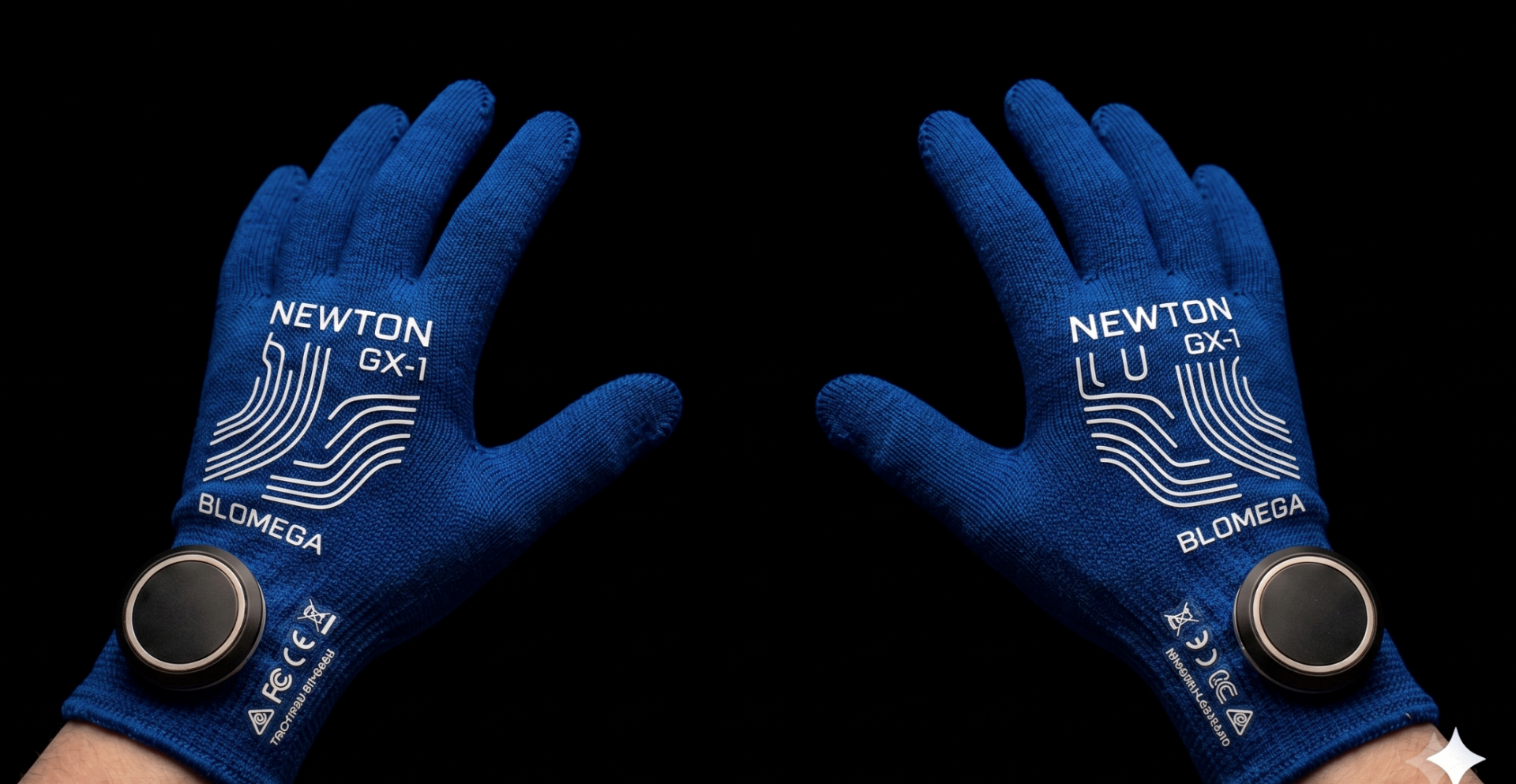
This is where a data layer complements an open ecosystem rather than competing with it. Blomega Lab's position is deliberately format-agnostic: capture human skill with fingertip force and bend synced to POV video, across countries, tasks, environments, and body types, and export it into whichever open container wins, LeRobot or RLDS. An open developer ecosystem needs an open, high-fidelity data substrate to train on. Supplying that substrate, rather than a competing platform, is the contribution that fits.
Sources and further reading
- Actuate 26 agenda, Foxglove
- ROS 2 RMW implementations, ROS docs
- Announcing the Open Source Robotics Alliance (2024)
- MCAP as the ROS 2 default bag format, Foxglove
- Isaac Sim 5.0 / Isaac Lab 2.2 general availability, NVIDIA
- Newton physics engine contributed to the Linux Foundation
- LeRobotDataset v3.0, Hugging Face
- Open X-Embodiment / RT-X
- OpenVLA, arXiv 2406.09246
- Physical Intelligence open-sources pi0 (openpi)
- NVIDIA GR00T N1, arXiv 2503.14734
- DYNA-2 technical report, Dyna Robotics
- Welcoming Tom Sanocki as VP of Engineering, 1X
- 1X's NEO hand is an API to the physical world, FourWeekMBA
- Unitree launches world's first humanoid robot app store
- Hugging Face launches Reachy Mini app store, VentureBeat
- Foxglove raises $40M Series B (Nov 2025)
- Qualcomm to acquire Arduino (Oct 2025)
- Humanoid robots in the home: product liability & privacy, Wilson Elser
Building or training robots?
We license manipulation datasets and run custom capture programs. Get in touch to see what fits.