Long-Horizon, Contact-Rich: Why Cooking Broke Robotics
Making a smoothie, harnessing a wire, or solving a Rubik's cube are the tasks foundation-model labs now benchmark on. They share the two properties that classical robotics could never handle at the same time.
When Genesis AI unveiled GENE-26.5, the demo reel was deliberate: two-handed cooking, wire harnessing, lab automation, a Rubik's cube, a smoothie. These are not random party tricks. They are the tasks that the previous generation of robotics could not do, chosen because they exercise the two properties that break classical planning at the same time: long horizons and rich contact.
Understanding why these two together are hard, and why the current generation of foundation models is finally starting to crack them, is the clearest way to see where the field is going.
The long-horizon problem
A long-horizon task is one where the current action only makes sense in the context of a goal ten or a hundred steps away. Picking up an onion is not the task. Picking up the onion so you can hold it against the board so you can slice it so you can add it to the pan so you can build a mirepoix so you can start a stock, that is the task. Any single sub-action, evaluated in isolation, looks fine or looks wrong depending on what comes next.
Classical planners handled this by writing the plan explicitly: symbolic goals, sub-goals, and preconditions. That works in structured environments and falls apart the moment the world does not match the plan. Learned policies handled it by cloning short trajectories, which works for pick-and-place and falls apart on anything with real sequencing.
Foundation models change the shape of this. A model conditioned on language and long context can hold the intent across many steps, and, if trained on enough long-horizon demonstrations, can chain sub-skills without an explicit plan. But that only works if the training data actually contains long-horizon trajectories, unbroken, with the intent preserved.
The contact-rich problem
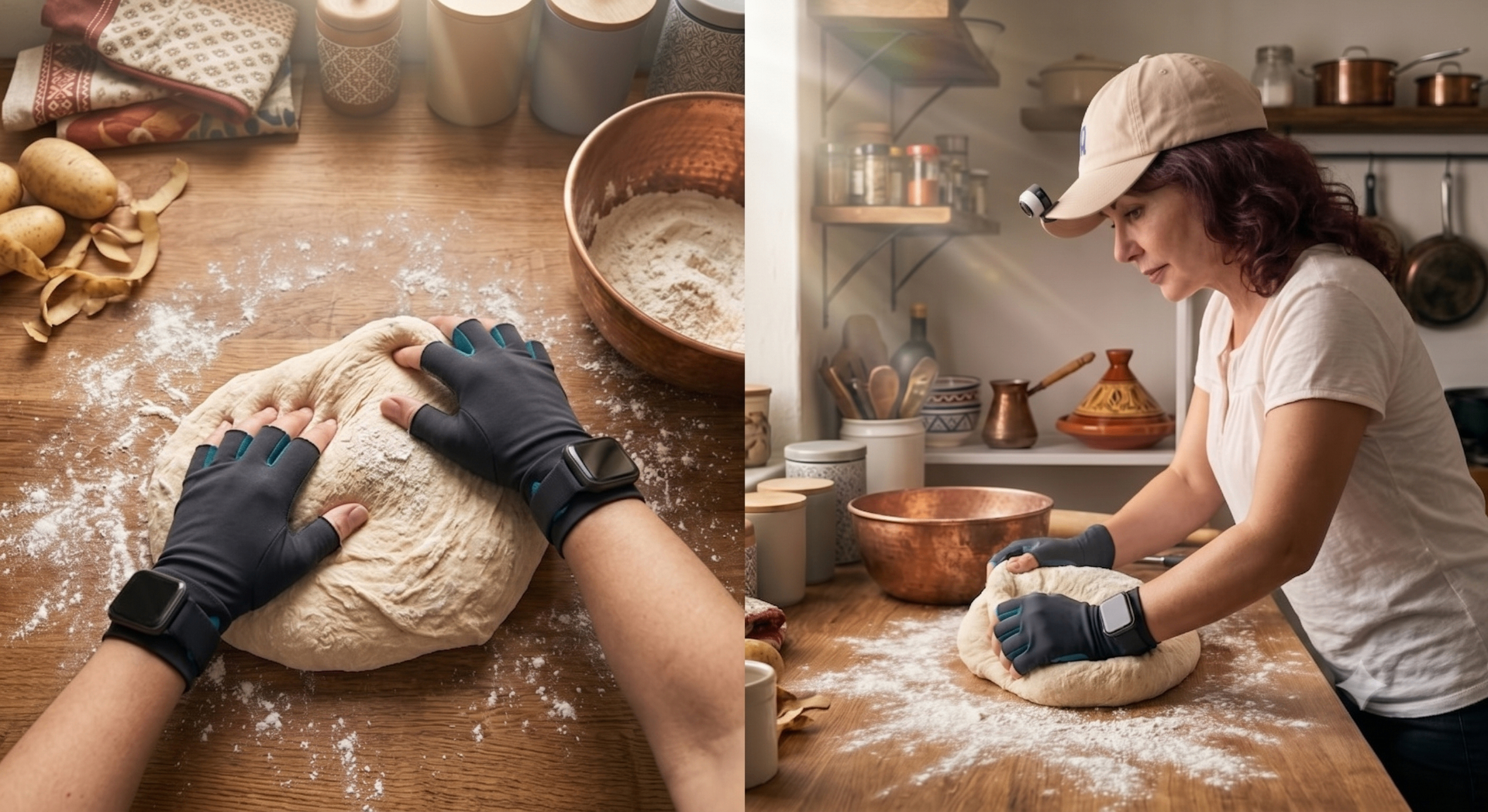
A contact-rich task is one where the interesting information is at the interface between the robot and the world, and it is small in position but large in force. Threading a wire through a grommet. Seating a bearing. Whisking eggs. Closing a plastic clip until it clicks. Peeling a potato without tearing chunks out of it.
Vision does not solve these. The camera cannot see the click. The camera cannot see the moment the tension in the wire changes. The camera cannot see the millisecond the shell starts to crack unevenly. What solves them is force and tactile signal, sampled fast enough to catch the event and paired with the vision frames that show what the hand was doing when it happened.
This is the reason every serious dexterous-manipulation dataset in 2026 is instrumented with force. It is not decoration. It is the channel that makes the policy trainable.
Why the two together broke everything before
Classical robotics could do long-horizon in structured environments (assembly lines with fixtures) and it could do contact-rich in narrow settings (force-controlled insertion of a single part). It could almost never do both. The moment you needed a plan that adapted step-by-step to force feedback across dozens of sub-actions in an unstructured space, you were out of the reach of any planner or narrow policy the field had.
The current bet, foundation models trained on wearable capture of humans doing exactly this kind of work, is the first credible attempt to do both at once. The demos out of Genesis and its peers suggest it is starting to work. What the field needs now is enough data of the right shape to make it work reliably.
The capture spec that follows
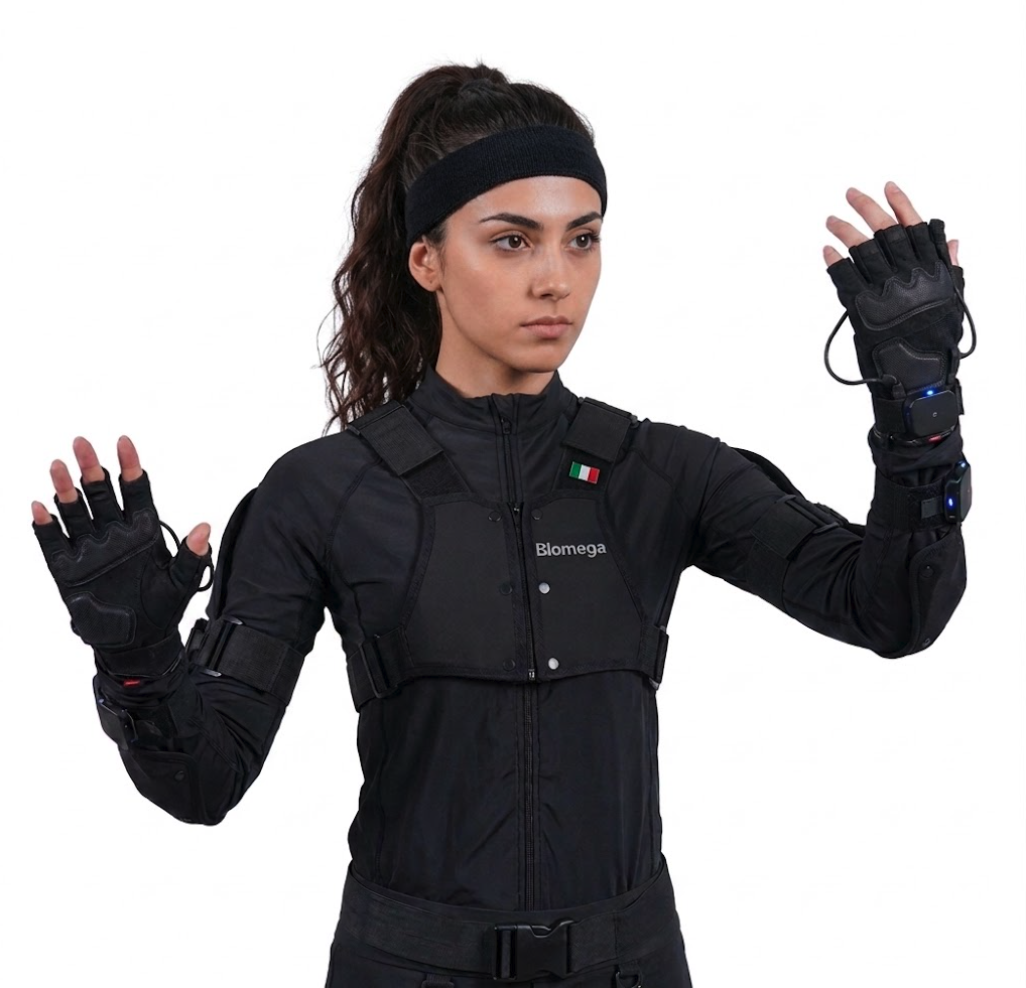
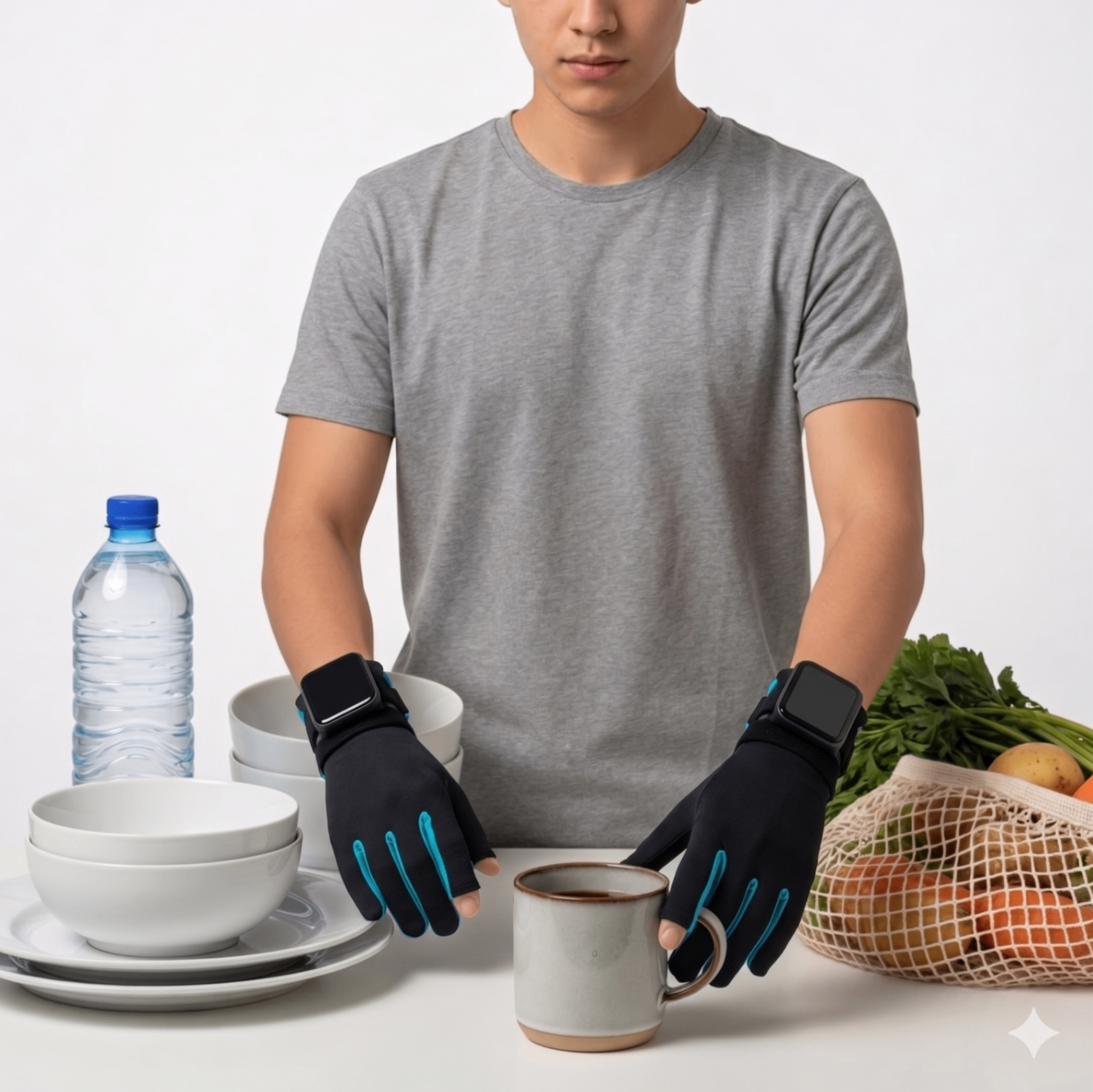
If the target tasks are long-horizon and contact-rich, the capture stack has to preserve both properties. That means unbroken trajectories, a full cooking session, not chopped clips, with hand pose, arm pose, gaze, and per-finger force sampled at rates that catch contact events. It means the operator wearing a rig they can actually work in for an hour without breaking flow. It means labels tied to the intent of the session, not the individual frames.
This is the specification the BLO LAB stack is built around. Full-body suit and glove capture, wireless, worn during real work, exported in a form that trains foundation-model-scale policies on the tasks that used to be out of reach.
Building or training robots?
We license manipulation datasets and run custom capture programs. Get in touch to see what fits.