Imitation Learning 101: From Human Demonstration to Robot Policy
A walkthrough of how a recorded human demonstration becomes a running robot policy, without the math jargon.
Imitation learning is the family of algorithms that turn demonstrations into policies. It is deceptively simple to state, 'do what the human did', and quite subtle to execute in practice. This article walks through the full loop, from the first recorded trajectory to a running robot, with an eye on the details that separate a working system from a stuck one.
Step 1, Record
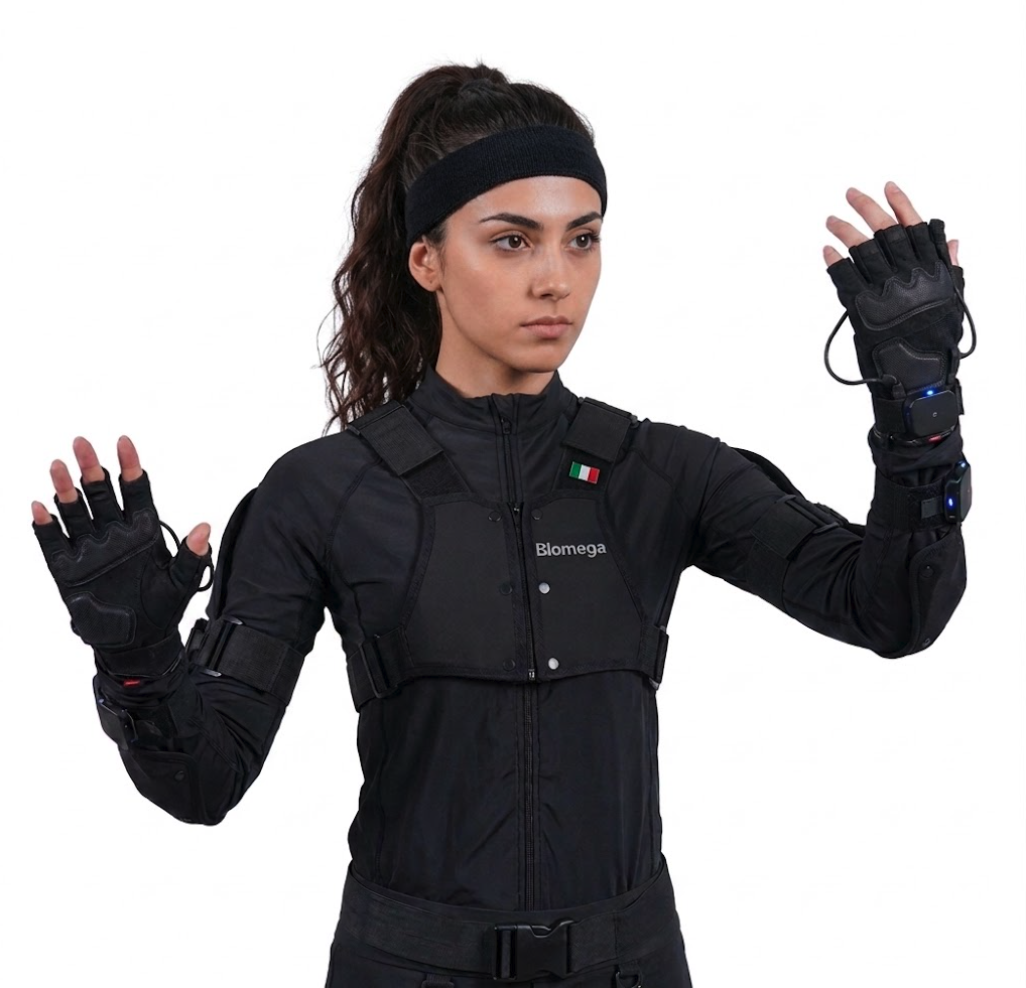
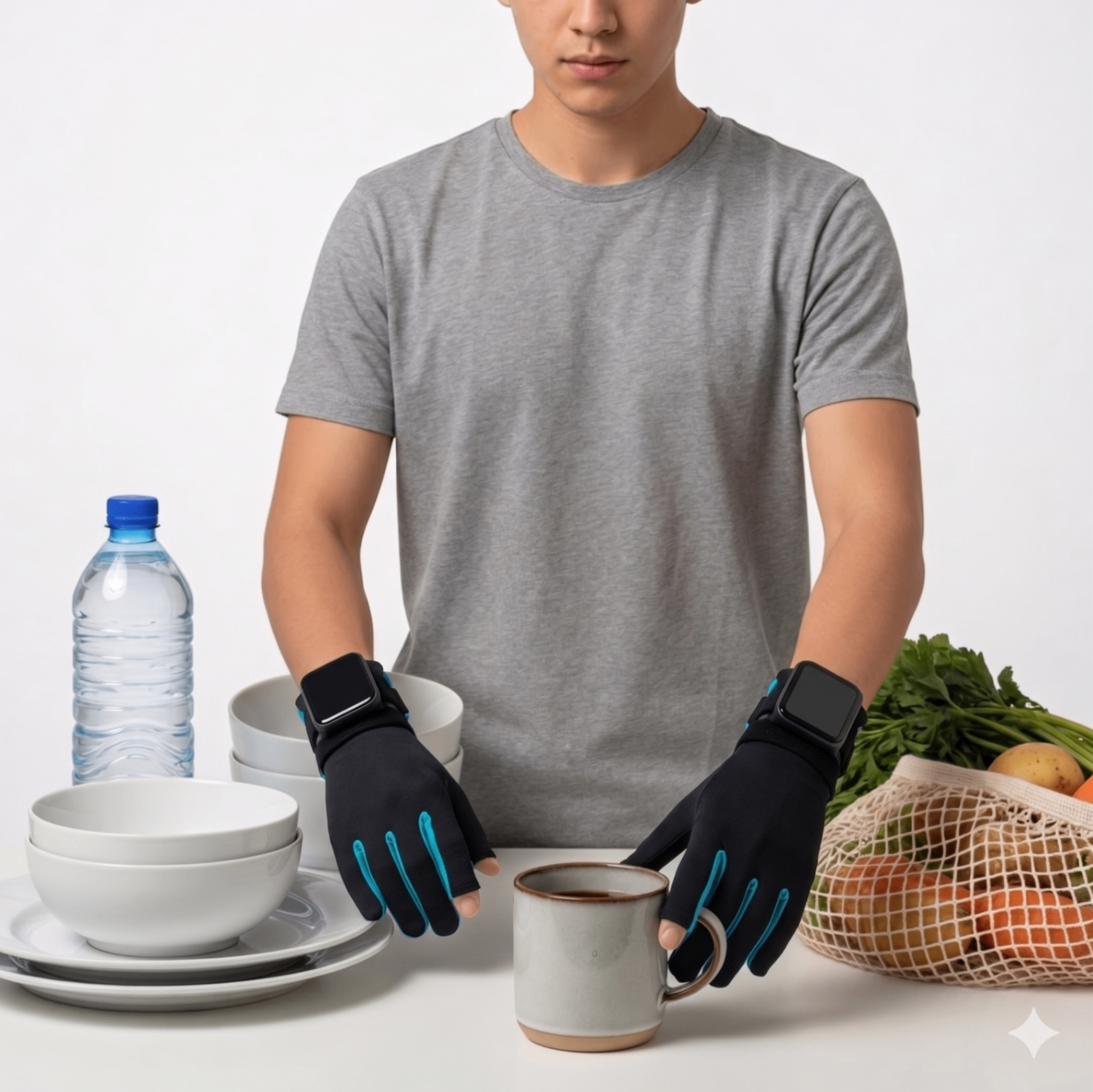
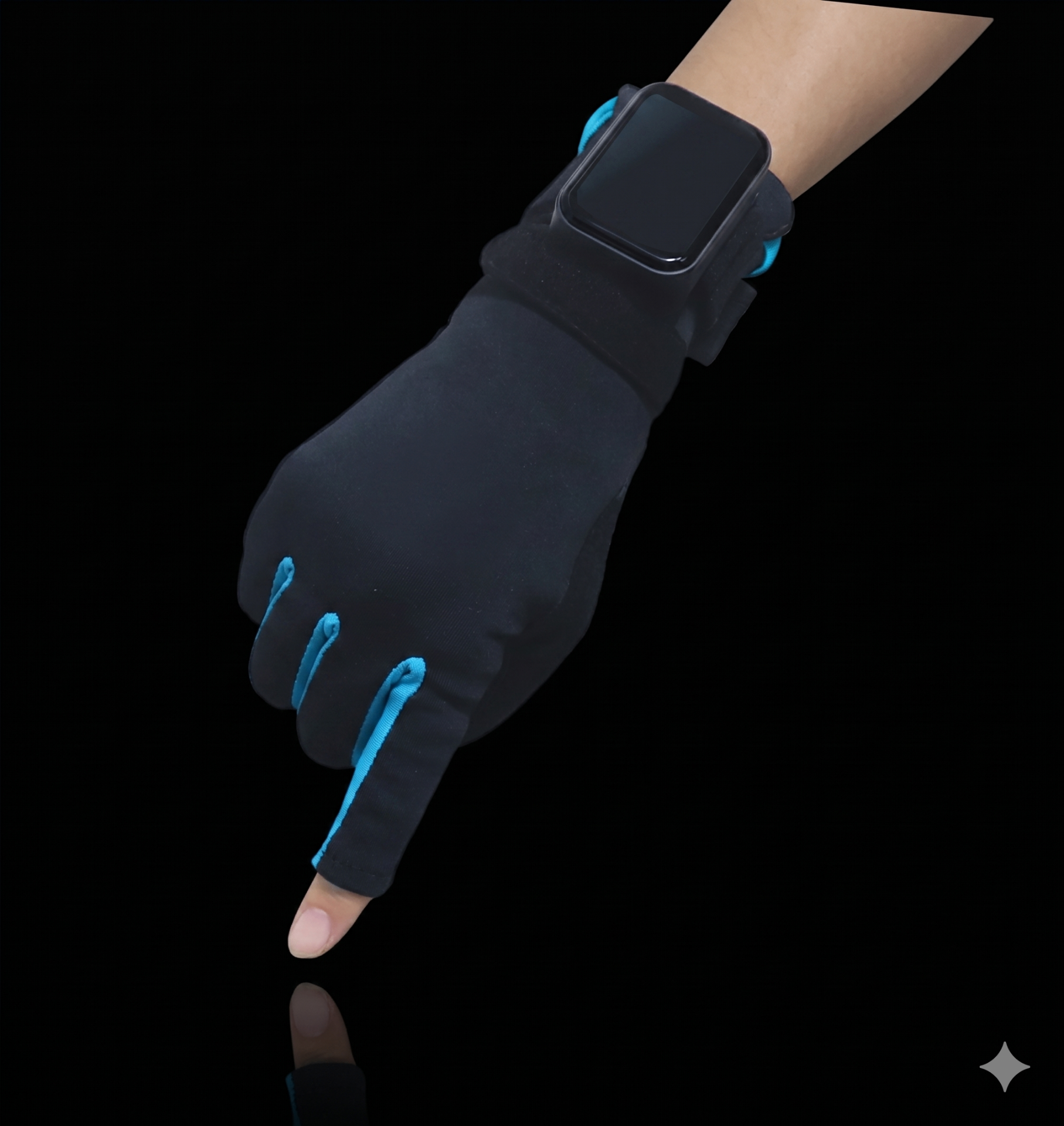
A human wears the capture hardware and performs the task ten, a hundred, or a thousand times. Each trial is a trajectory: a time-series of observations (video, joint angles, forces, audio if relevant) paired with the action taken at each step. The action, depending on your setup, might be a joint velocity, a delta end-effector pose, or a target position.
The variance across trials is a feature. Two demonstrations of 'pour water into a cup' will differ in speed, approach angle, and even hand pose. That variation is what teaches the policy the manifold of correct behavior rather than one memorized trajectory. Aim for demonstrator diversity as well: several operators, several environments, several object instances.
Step 2, Align and clean
Real captures are noisy. Streams drift, sensors drop frames, the operator sneezes, a light flickers, someone walks through the shot. A preprocessing pipeline aligns clocks across sensors, interpolates gaps, and segments the recording into task episodes with clear start and end markers. This step is unglamorous and it is where most of the quality signal comes from.
Alignment is worth being paranoid about. A 30 ms clock offset between video and joint angles will teach the policy a time-shifted action model that consistently fires slightly too early or too late. It will train, it will look fine on metrics, and it will fail in ways that are hard to debug at deployment.
Step 3, Encode
Raw pixels and raw joint angles are not directly consumed by the policy. Vision is passed through an encoder (a ViT or a domain-specific CNN) that produces a compact embedding. Proprioception is normalized and often concatenated with a positional encoding. Force channels get their own normalization because their dynamic range is different.
The encoder is often frozen for the first phase of training and then fine-tuned late. Pretrained encoders from foundation models save enormous amounts of data. A frozen DINOv2 encoder can cut the demonstration count needed for a new task by two-thirds compared to training a vision encoder from scratch.
Step 4, Train
Modern imitation methods, diffusion policy, action-chunking transformer, RT-2 style VLA, learn a conditional distribution over actions given the current observation. Training is supervised learning with a twist: the loss is over action sequences (chunks of 8 to 32 steps), not single actions. Chunking dramatically improves smoothness and lets the policy commit to short-horizon plans instead of reactive twitching.
The training-time details that matter most: strong data augmentation on the vision stream, careful action normalization, and enough epochs that the policy actually memorizes the demonstrations before you evaluate. Undertraining is the most common cause of underperformance in academic reproductions.
Step 5, Deploy
The policy runs on a robot. It will fail in interesting ways: it will drop objects it never saw, it will confuse two visually similar cups, it will lose track when the lighting shifts. Every failure is a signal about which demonstration you are missing. Deployment is not the end of the loop; it is the diagnostic tool that decides what you capture next.
Instrument deployment heavily. Log every action, every observation, every intervention when the operator has to take over. Those interventions are gold, a single corrective demonstration is worth ten fresh ones because it targets a known failure mode.
Step 6, Iterate
The loop is: capture, train, deploy, watch it fail, capture the failure modes, retrain. Repeated dozens of times, this is how modern robotic capabilities are actually built. There is no clever architecture that shortcuts this loop. The teams that ship are the teams that turn the crank the fastest.
Common pitfalls
Capturing only successful demonstrations. Include recoveries, grasps that slip and get re-established, cups that tip and get caught. Policies that never saw a recovery cannot execute one.
Recording with a single operator. Their idiosyncrasies get baked in. Even three operators cuts the personal-style signal enough for the policy to focus on the task.
Skipping calibration between sessions. A one-centimeter camera shift is a policy-breaking shift. Recalibrate every session, log the parameters, and treat any uncalibrated session as unusable.
Building or training robots?
We license manipulation datasets and run custom capture programs. Get in touch to see what fits.