Why Force and Tactile Signal Belongs at the Fingertip
A follower arm can approximate force from joint torque. A fingertip sensor measures it directly. For contact-rich policies, the gap between the two is the gap between a policy that works and one that plateaus.
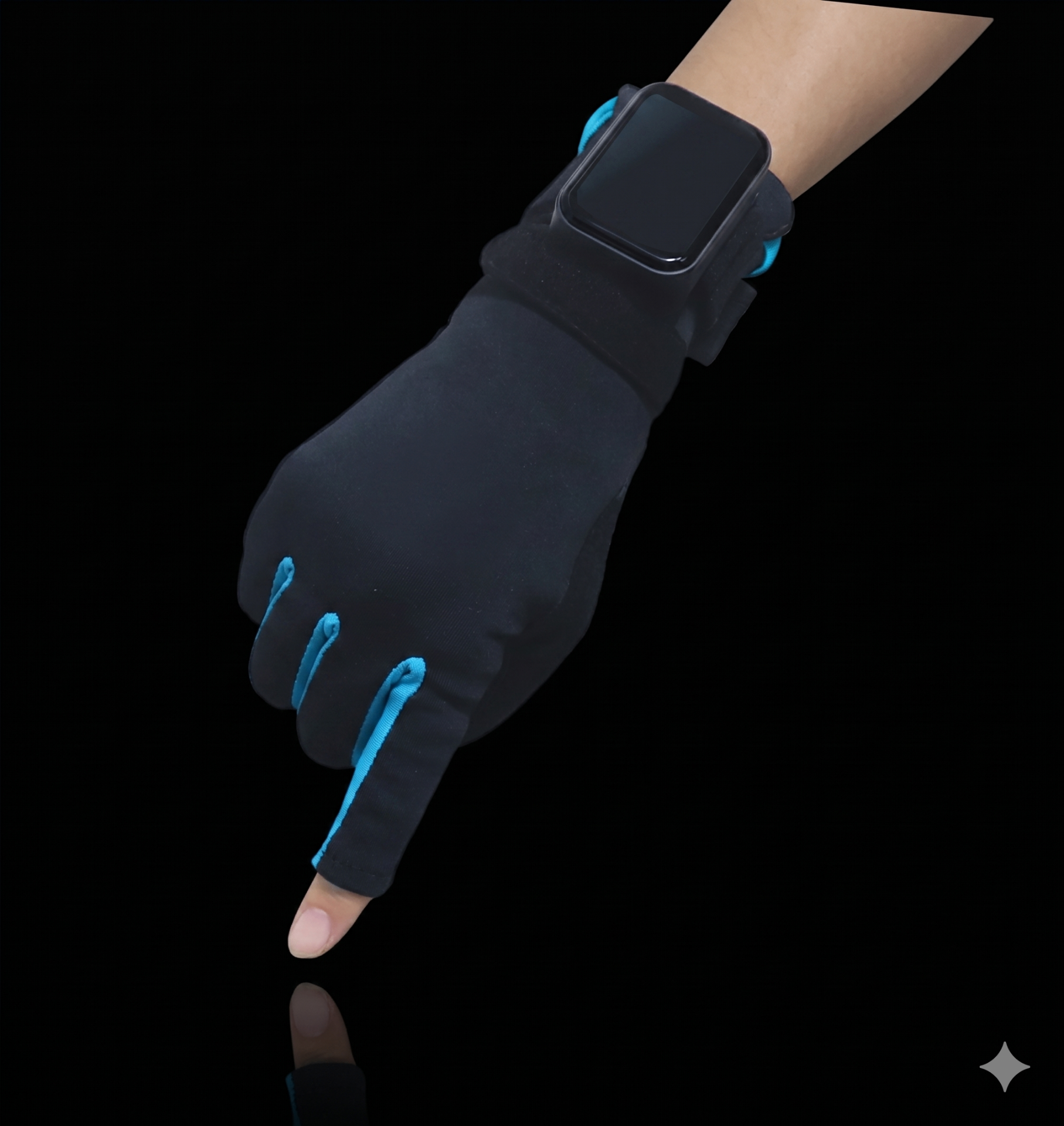
Teleop rigs typically infer contact force from motor currents on the follower arm. Wearable gloves measure force at the fingertip with a dedicated sensor. Both produce a number labeled 'force.' The two numbers are not the same, and the difference matters.
What joint-torque estimation misses
Joint-torque force estimation is a global signal, it tells you the total force on the end-effector, low-pass filtered through the arm's mass and its controller. It cannot distinguish which finger is loaded. It cannot see forces that are internal to the grip. It cannot see slip until slip has already produced motion. And it is delayed by the arm's mechanical bandwidth, typically by tens of milliseconds.
For coarse manipulation this is fine. For anything where the interesting physics happens at the fingertip, folding, threading, seating, whisking, peeling, it is not. The signal a foundation model needs to learn the fine structure of contact is exactly the signal joint-torque estimation cannot resolve.
What fingertip sensors provide
Per-finger normal force, sampled at several hundred hertz, hardware-timestamped against vision. The click of a snap fastener as a discrete event in the force channel. The moment a fingertip loses friction on a smooth surface, visible as a millisecond-scale drop before the object has moved a millimeter. The specific pressure distribution that says a grip is stable versus one that is about to fail.
None of this is available from a teleop rig unless the follower gripper itself is instrumented with tactile sensors, and if it is, the operator is still driving through a leader that cannot feed the force back to them. The demonstration is captured but the demonstrator is not in the loop with it.
Why this decides which tasks train and which do not
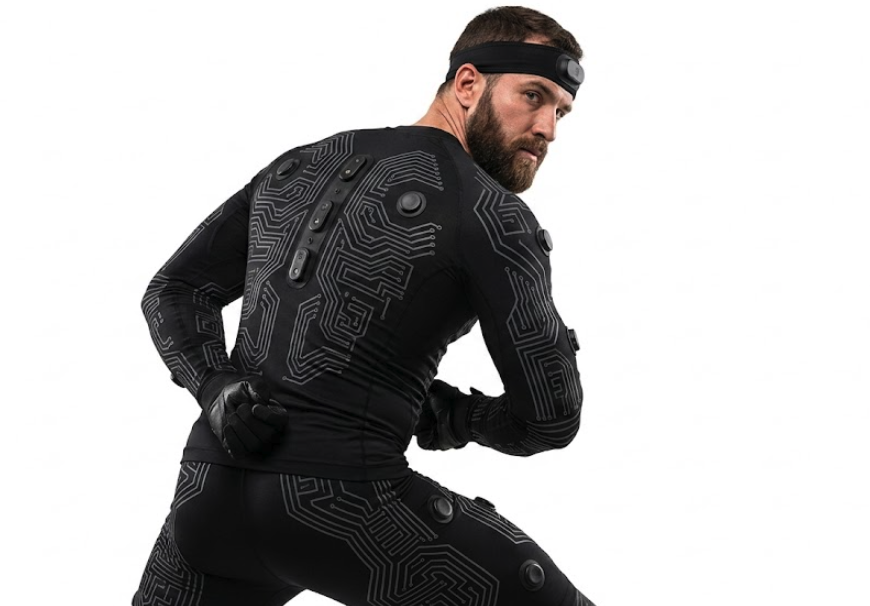
The tasks where fingertip force matters most are exactly the tasks the industry has singled out as the frontier, cooking, wire harnessing, deformable objects, precision assembly. A dataset without high-quality fingertip force cannot train competitive policies on any of them. This is one of the strongest reasons the wearable-glove category exists and is being funded, and it is a capability the teleop-warehouse model does not naturally deliver.
Building or training robots?
We license manipulation datasets and run custom capture programs. Get in touch to see what fits.