
Why Fingertip Force Is a Better Signal Than Fingertip Pose
Pose tells you where the finger was. Force tells you what the finger was doing. For contact-rich tasks, which is most of them, the second is decisive and the first is derivative. A working primer on why the field is finally taking force seriously.
For most of the modern history of learned manipulation, the observation stream that mattered was pose. Camera frames, wrist coordinates, finger joint angles. The action stream that mattered was also pose, target end-effector coordinates, target gripper opening. A whole training culture grew up around treating manipulation as a geometric problem with a small friction term.
The last two years have been a quiet correction on this. Enough policies have failed enough contact-rich benchmarks in enough obvious ways that the field is finally saying out loud what practitioners have muttered for a decade: pose is not the signal. Force is.
What pose tells you
Pose is the position and orientation of the hand and its joints at a moment in time. It is easy to measure, easy to represent, and easy to feed to a policy. It is also almost useless at the moment of contact, which is exactly when the interesting things happen.
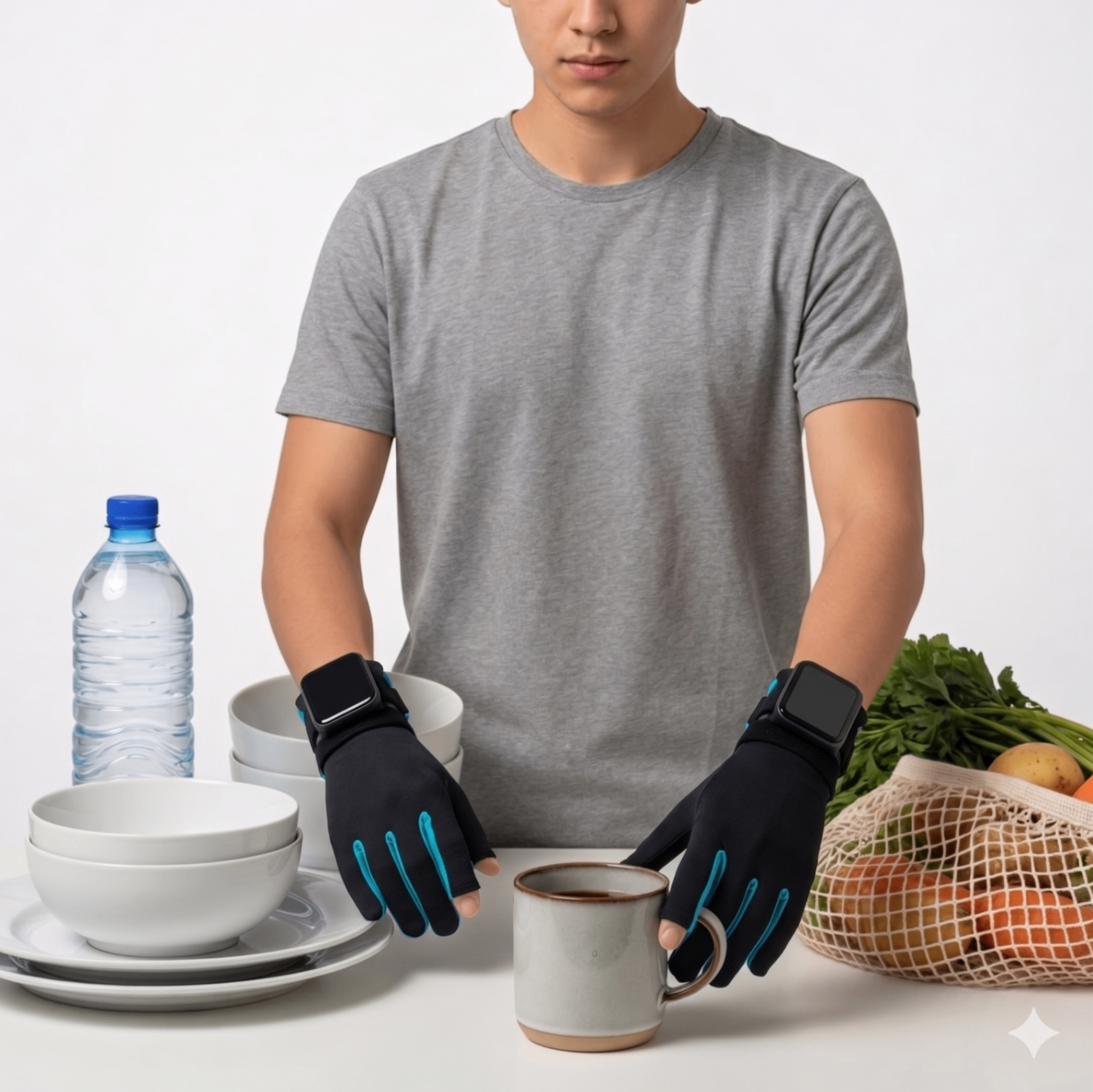
Consider a person picking up a full mug of coffee. Their finger pose right before contact is not meaningfully different across a thousand successful pickups. What varies, and what determines success, is the force profile: how quickly the fingers close, how much force is applied where, how that force is adjusted as the mug's weight and center of mass become known through the grip.
A pose-only trajectory captures the shape of the motion. It does not capture the intent. Any policy trained only on pose has to infer the force behavior from the visual scene and the subsequent trajectory, which is a much harder inverse problem than reading force directly.
What force tells you
Force is a physical quantity you can act on. It is also a diagnostic quantity you can label. From a fingertip force trace you can recover contact onset, contact offset, applied normal force, applied shear, slip events, and the sub-corrections that follow every micro-slip.
A policy that sees force can learn to close a hand until a target contact force is reached rather than until a target joint angle is reached. This distinction sounds small and is decisive. Target joint angles fail whenever the object's geometry differs from what the policy was trained on. Target contact forces generalize across geometry because the physical goal, hold this thing firmly enough not to drop it and gently enough not to crush it, is invariant.
Force also gives the policy a signal at the moment of failure. A pose-only policy that drops an object learns nothing except that the pose sequence did not lead to a good outcome. A force-aware policy learns that the grip force fell below the required friction cone at a specific moment, and that particular kind of labeled failure is trainable in a way that visual failure is not.
Why the community underused it for so long
Historical accident, mostly. The datasets that seeded modern manipulation learning came from grippers with no force sensing. When the tools you have are cameras and joint encoders, the models you build read cameras and joint encoders. The field's default representations followed the default sensors, and the sensors were pose-oriented because early manipulation research grew out of motion planning, not out of contact mechanics.
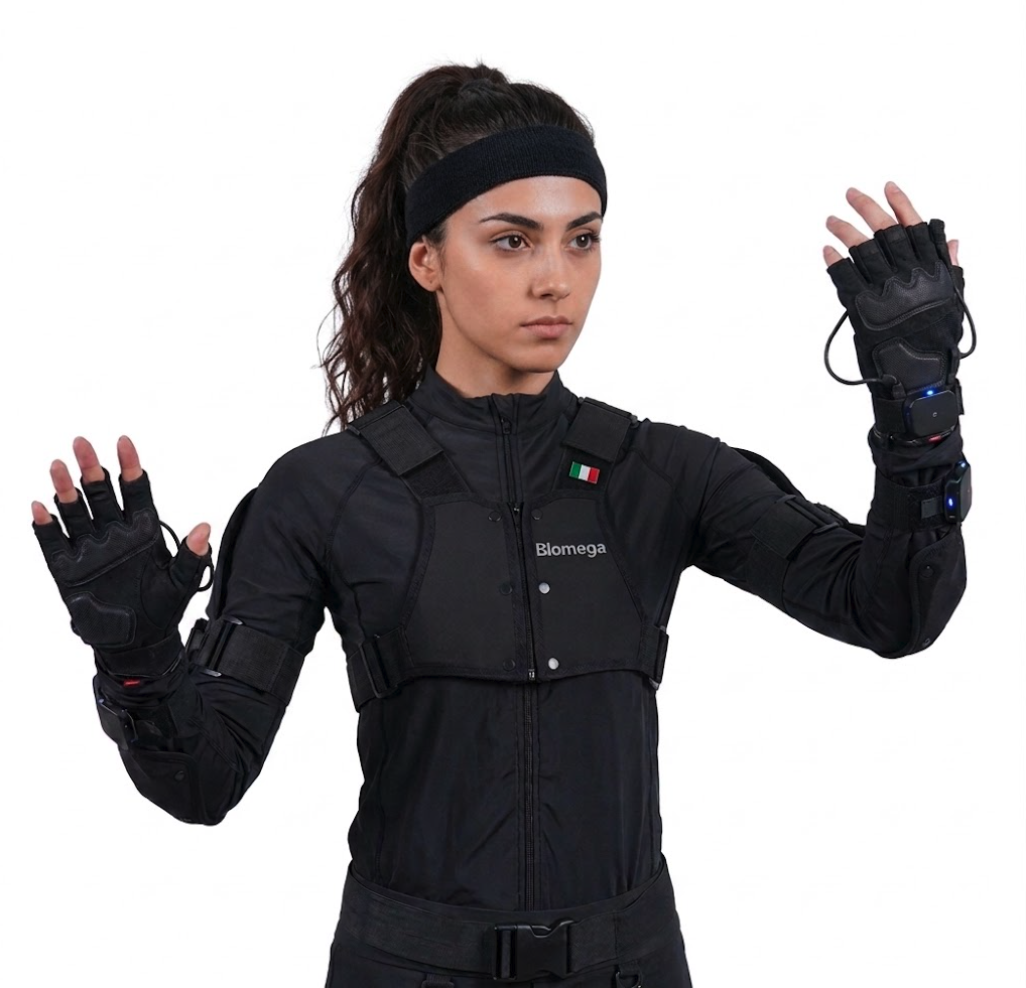
The second reason is that force is harder to standardize than pose. A joint angle is a scalar with an obvious unit. A fingertip force reading depends on where the sensor is, how it is calibrated, what the elastomer is doing, and how the operator is wearing the glove. Building capture hardware that produces force values comparable across sessions and operators is real engineering, and until recently no one had shipped a wearable that did it credibly at scale.
What changes when a policy gets force
Several things change together. Grasp success rates improve most on the objects that pose-only policies handled worst, soft, slippery, or unfamiliar. Bimanual tasks improve because coordination between hands is enforced by shared object dynamics that force reveals and pose obscures. Long-horizon tasks improve because failure detection becomes explicit rather than emergent, and the policy can retry rather than continue into a compounding error.
The training loop also gets easier. Force-labeled data supports clean auxiliary losses, predict the next slip event, predict the object's mass from the initial grip force profile, that add curriculum without requiring extra human annotation. These auxiliary losses are quietly some of the highest-leverage additions to a manipulation training recipe, and they are only available when the underlying data contains force at all.
The consequence for anyone building a robotics dataset today is direct. If you are collecting demonstrations without fingertip force, you are shipping the training corpus of a decade ago. The next piece looks at how large the resulting gap already is.
Building or training robots?
We license manipulation datasets and run custom capture programs. Get in touch to see what fits.