The Embodiment Transfer Problem in Teleoperated Data
Data captured on one robot does not automatically train a policy for another. The gap between capture embodiment and deployment embodiment is the hidden tax on every teleoperation dataset.
A policy trained on demonstrations from a specific robot arm is, by default, a policy that runs on that specific robot arm. Deploying it on a different arm, even one with the same nominal degrees of freedom, introduces distribution shift that has to be closed by fine-tuning, sim-to-real, or a second round of capture on the new hardware.
This is the embodiment transfer problem, and it is the reason teleop-warehouse datasets do not compose across labs the way people initially expected they would.
Why arms that look identical are not identical
Two seven-DoF arms from different vendors, with the same reach and the same payload spec, will still have different mass distributions, different joint damping, different backlash, different maximum accelerations, and different controller latency. A policy that learned to compensate for one set of these will generalize badly to the other. The state and action distributions the model saw during training do not overlap the ones it sees at deployment.
The gripper matters even more than the arm. A policy trained on a two-finger parallel gripper cannot be dropped onto a three-finger gripper without significant relearning, because the affordances of the two are structurally different, what counts as 'a good grasp' is not the same shape in each action space.
The wearable capture advantage
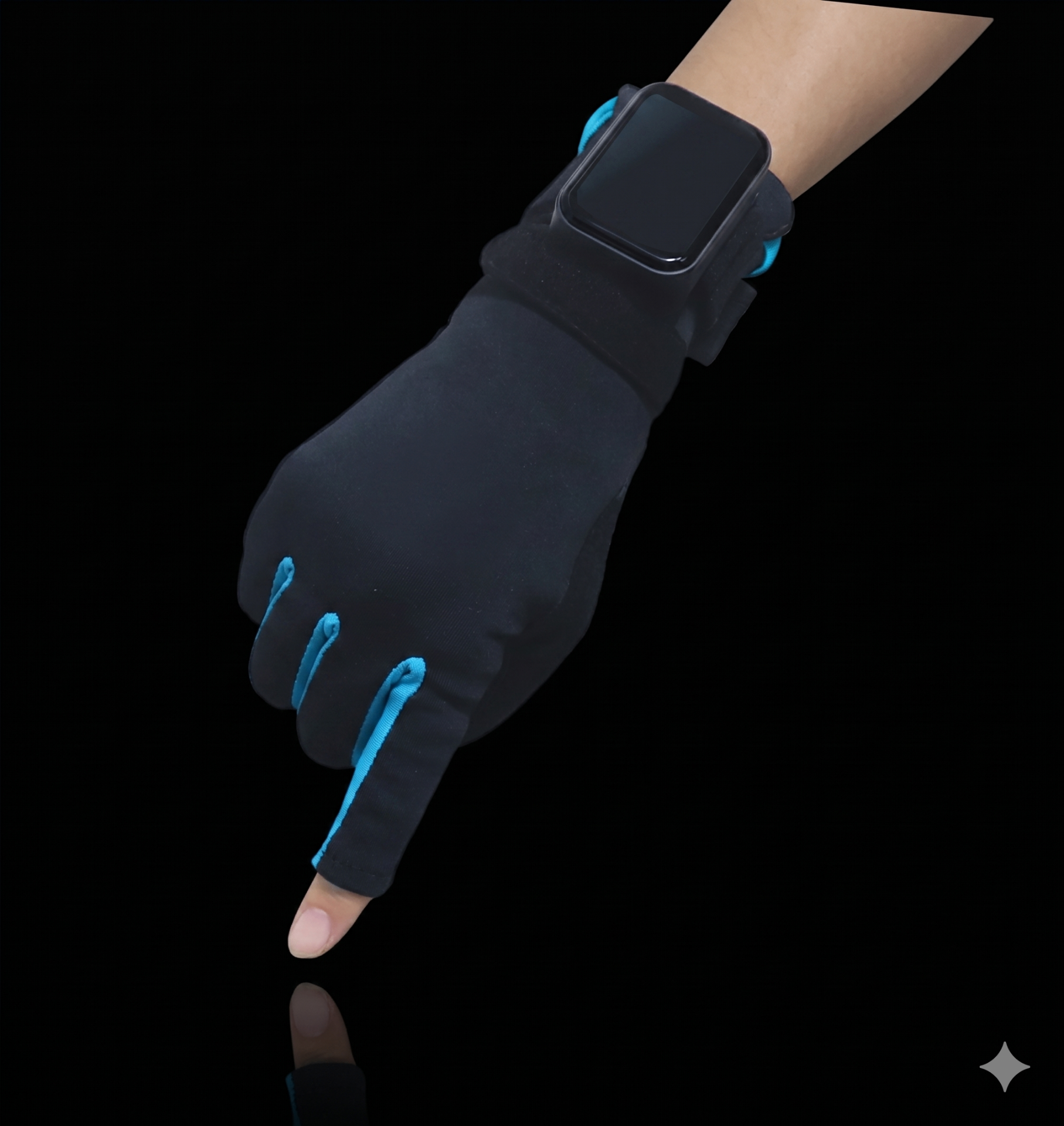
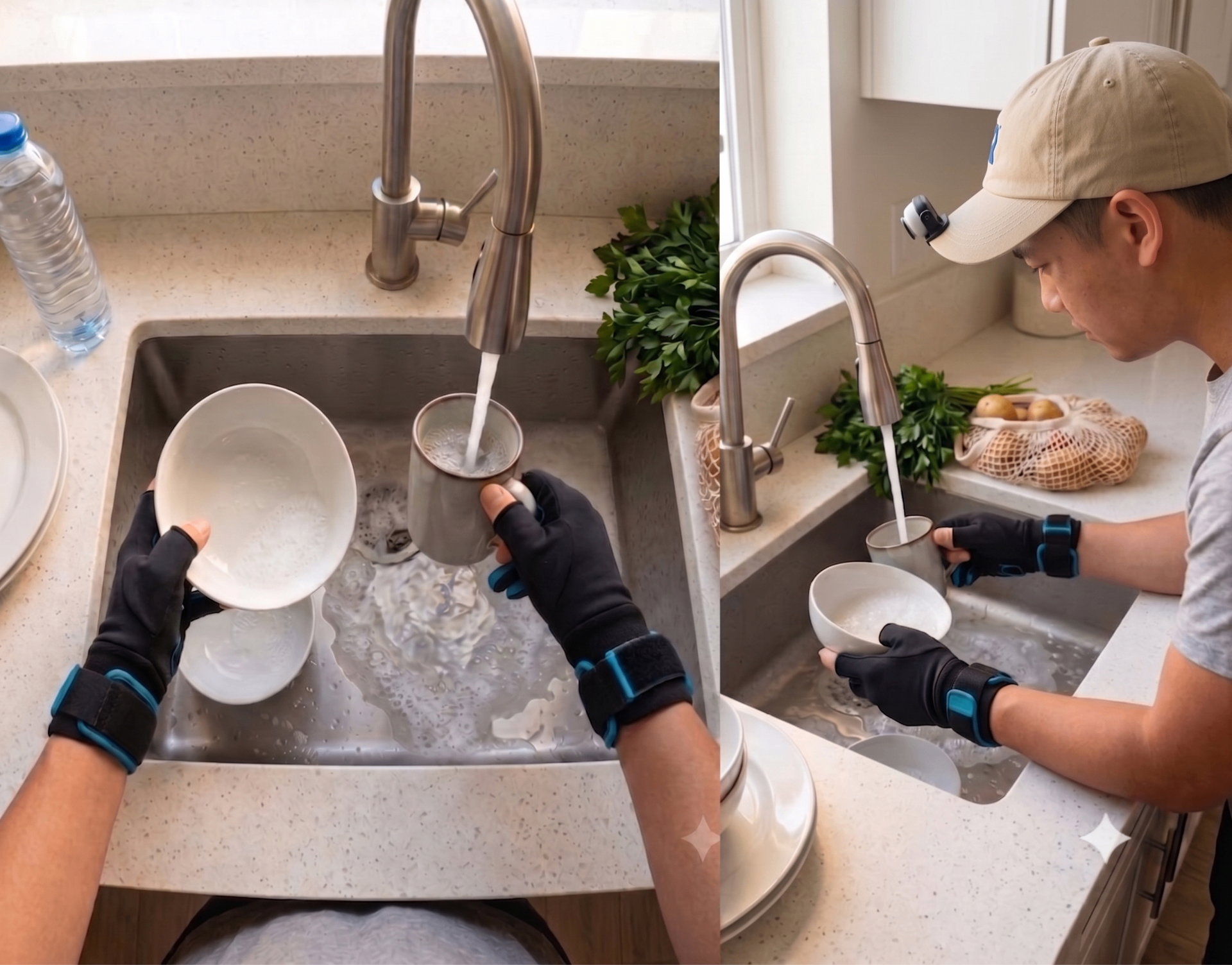
Human hands and bodies do not have this problem in the same way. The capture is of a canonical morphology, the human, and the retargeting to any specific robot happens as a separate, documented, replaceable step. If a lab changes its target hand from a 12-DoF to a 21-DoF design, the underlying human demonstrations do not have to be recaptured; only the retargeting layer changes.
This is one of the strongest structural arguments for human-in-the-loop capture at scale. The demonstration is future-proofed against the hardware roadmap in a way a teleoperated demonstration is not.
When teleop transfer is fine
For a lab shipping one platform, into one deployment context, for the next two years, teleop transfer is a non-issue. The capture embodiment is the deployment embodiment. The tax does not apply. This is a real slice of the market and it is why teleop-warehouse companies have real customers.
For a lab building a universal brain, or any lab that expects its target hardware to change more than once in the lifetime of its dataset, the tax is real and it compounds. Every teleop-captured hour has a shelf life tied to the specific robot it was captured on. Every wearable-captured hour outlives its capture rig.
Building or training robots?
We license manipulation datasets and run custom capture programs. Get in touch to see what fits.