Dexterity-First Foundation Models: What a Robotics Foundation Model Actually Requires
The field is converging on a new class of model, the Robotics Foundation Model, trained not on text but on trajectories. Here is what makes a dexterity-first RFM different from a generalist VLA.
The last two years have produced a small explosion of models that call themselves foundation models for robotics. Some are vision-language-action models that treat action as another token stream. Some are diffusion policies scaled up with more encoder capacity. Some are hybrid systems that predict a plan in language and a trajectory in continuous space. What they share is an ambition: one model, many robots, many tasks.
The trend inside that trend is more specific and more interesting. A subset of the field is building foundation models with dexterity as the primary axis of scaling. Not locomotion. Not navigation. Not pick-and-place with a two-finger gripper. Five-finger, contact-rich, tolerance-tight manipulation of the kind that dominates industrial work. Call this class a dexterity-first Robotics Foundation Model, or dRFM.
The design constraints for a dRFM are different from a generalist VLA, and understanding those differences is the fastest way to understand what kind of data these models will consume for the rest of the decade.
What a generalist VLA optimizes for
A generalist VLA is optimized for breadth. It wants to have seen many embodiments, many camera setups, many task descriptions in language, and many environments. The action head is typically low-dimensional, a 7-DoF end-effector command, sometimes a parallel-jaw gripper open/close scalar. The training set looks like Open X-Embodiment: heterogeneous, large, mostly two-finger, mostly camera-driven.
This works remarkably well for the tasks it was designed for: reach, grasp, place, push, wipe. It generalizes across viewpoints in a way earlier policies did not. It also hits a wall the moment the task requires more than two fingers or more than a coarse grasp taxonomy.
What a dRFM optimizes for
A dexterity-first model inverts the priorities. Breadth of embodiment matters less than depth of hand. The action space is high-dimensional, twenty or more joints if the target hand is anthropomorphic. The observation space includes tactile arrays, per-finger force, and often proprioception at rates the visual stream cannot match. The loss has to reward small differences in contact behavior that a generalist model would smear out.
This has three consequences for the data pipeline. First, the demonstrations must include the full hand, not just the wrist pose. Second, they must include force and contact signals sampled fast enough that transient events like slip and re-grip survive downsampling. Third, they must span enough task variation within a narrow domain to learn the sub-manifold of dexterous behavior, rather than the whole manifold of everything a robot might do.
Put another way: a dRFM wants a mile deep and a hundred yards wide. A generalist VLA wants an inch deep and a continent wide. The data providers serving these two shapes look very different.
The 4D+ requirement
Several teams have started using the phrase 4D+ to describe what a dRFM needs. Three spatial dimensions plus time is 4D. The plus is everything a camera cannot see: force at each fingertip, contact area, joint torque, IMU-derived acceleration, sometimes EMG or audio. A trajectory becomes a bundle of synchronized channels rather than a sequence of poses.
This is not a marketing distinction. The 4D+ signal is what allows a model to distinguish between a successful and a failed dexterous action when the visual outcome looks identical. Two frames of a hand holding a screwdriver look the same whether the shaft is about to slip or firmly seated. The force channel tells you which is which. Train without it and the model learns to look plausible; train with it and the model learns to act correctly.
Why capture has become the pacing constraint
A dRFM trained on a million hand-hours would be a very different object from one trained on ten thousand. Nothing about the architecture is exotic. The scaling story is the same as language models: more parameters, more data, more compute. But the data does not exist in a scrape-able form. It has to be produced.
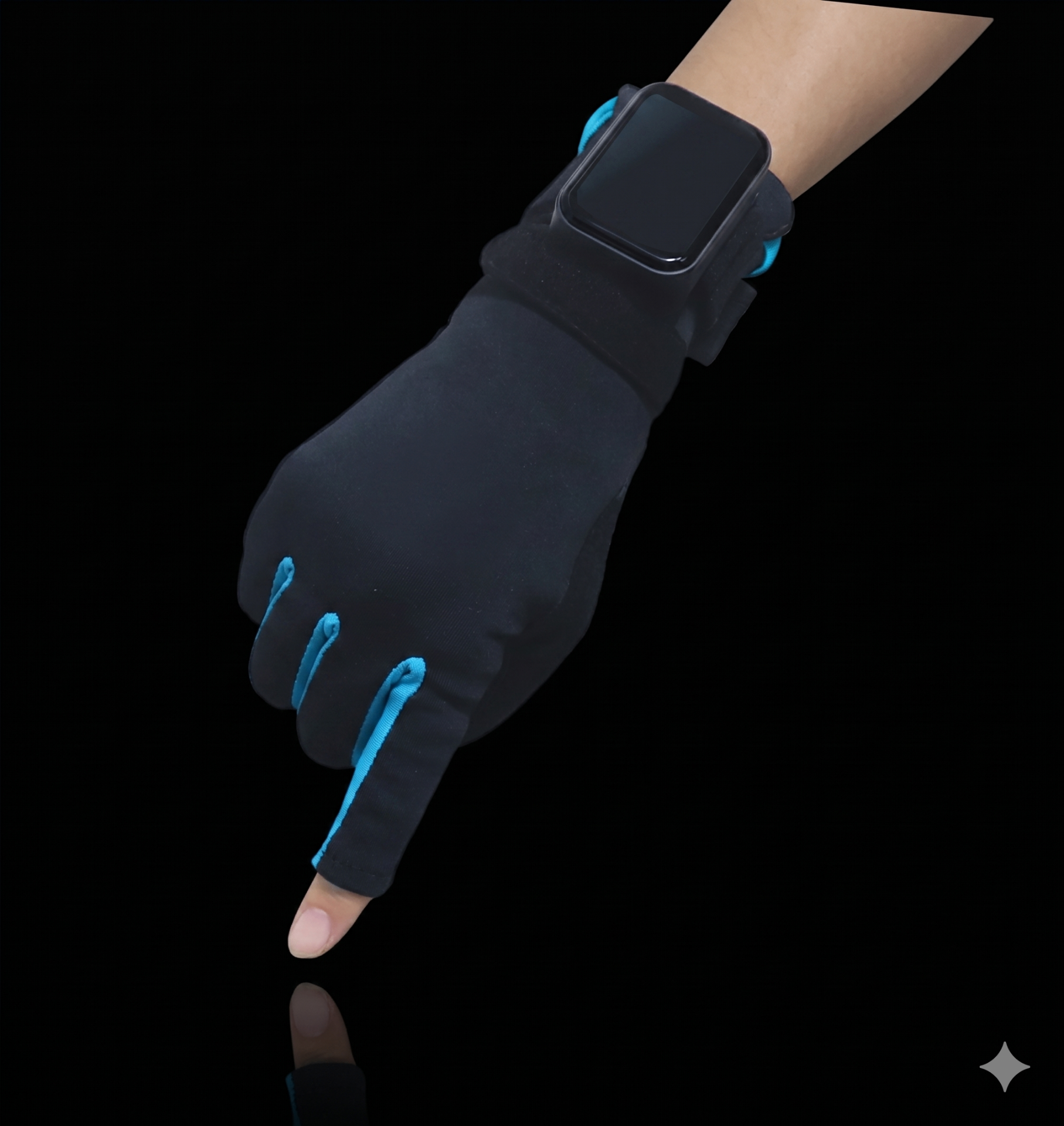
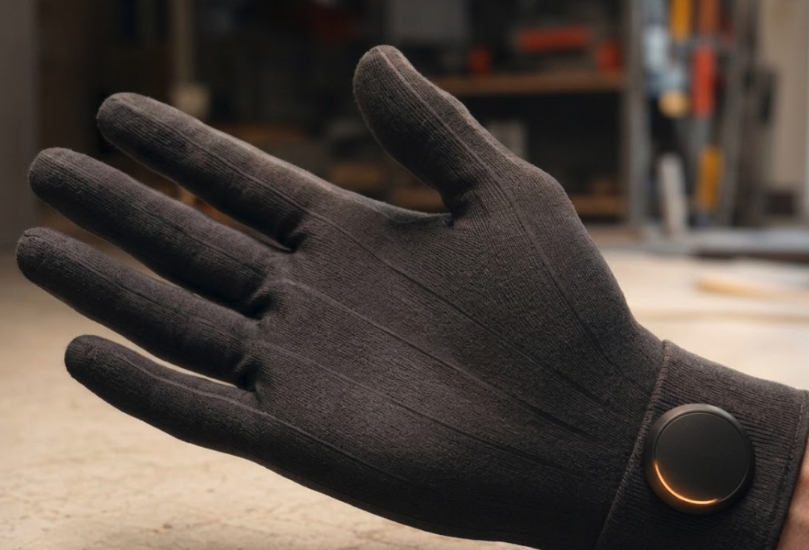
That production runs at the speed of gloved operators doing real work in real environments, which is why the companies building dRFMs are entering into multi-year data partnerships with providers who can guarantee capture volume, quality, and diversity. BLO LAB is one of those providers. The gear we build and the operator network Talika runs exist because a dexterity-first foundation model, at scale, is bottlenecked on exactly one thing: hand-hours.
Building or training robots?
We license manipulation datasets and run custom capture programs. Get in touch to see what fits.