
Cost Per Demonstration Is the Only Metric That Matters
Total dataset cost is the wrong denominator. The metric that decides whether your data program compounds is the fully-loaded cost of one usable demonstration hour.
Every data-infrastructure company in robotics is asked the same question by the same buyers: what does an hour of data cost? The answers vary by an order of magnitude depending on how the question is scoped, and that variation is where most of the misunderstanding in the industry lives.
What 'cost per demonstration hour' actually contains
Fully-loaded, one hour of usable demonstration data includes the operator's wage plus overhead, the amortized capex of whatever they are wearing or driving, the floor space or workspace they occupy, the labeling and QA pass that turns a raw session into a training-ready trajectory, and the reject rate, the fraction of hours that never make it into a training set because a sensor dropped, the operator broke form, or the task drifted out of spec.
That last term is the one most estimates ignore, and it is where teleop warehouses and wearable programs diverge most sharply. A teleop cell with a hardware failure loses the operator's hour and the arm's hour. A wearable session with a hardware failure loses the operator's hour only. The rig is a fraction of the cost of the human, so the recovery is faster.
The number that governs everything downstream
If your fully-loaded cost per usable demonstration hour is $500, a hundred thousand hours of data is $50M. If it is $80, the same dataset is $8M. That is not a marginal difference. It is the difference between a foundation-model program that can afford to retrain quarterly and one that can only afford to retrain when it raises another round.
The teams that treat this number as the primary metric, and instrument their pipeline to drive it down each quarter, are the ones that will still be shipping when the current funding cycle turns. The teams that treat data as a bulk procurement item are exposed to whatever their supplier's cost structure happens to be.
Where wearable capture has structural advantage
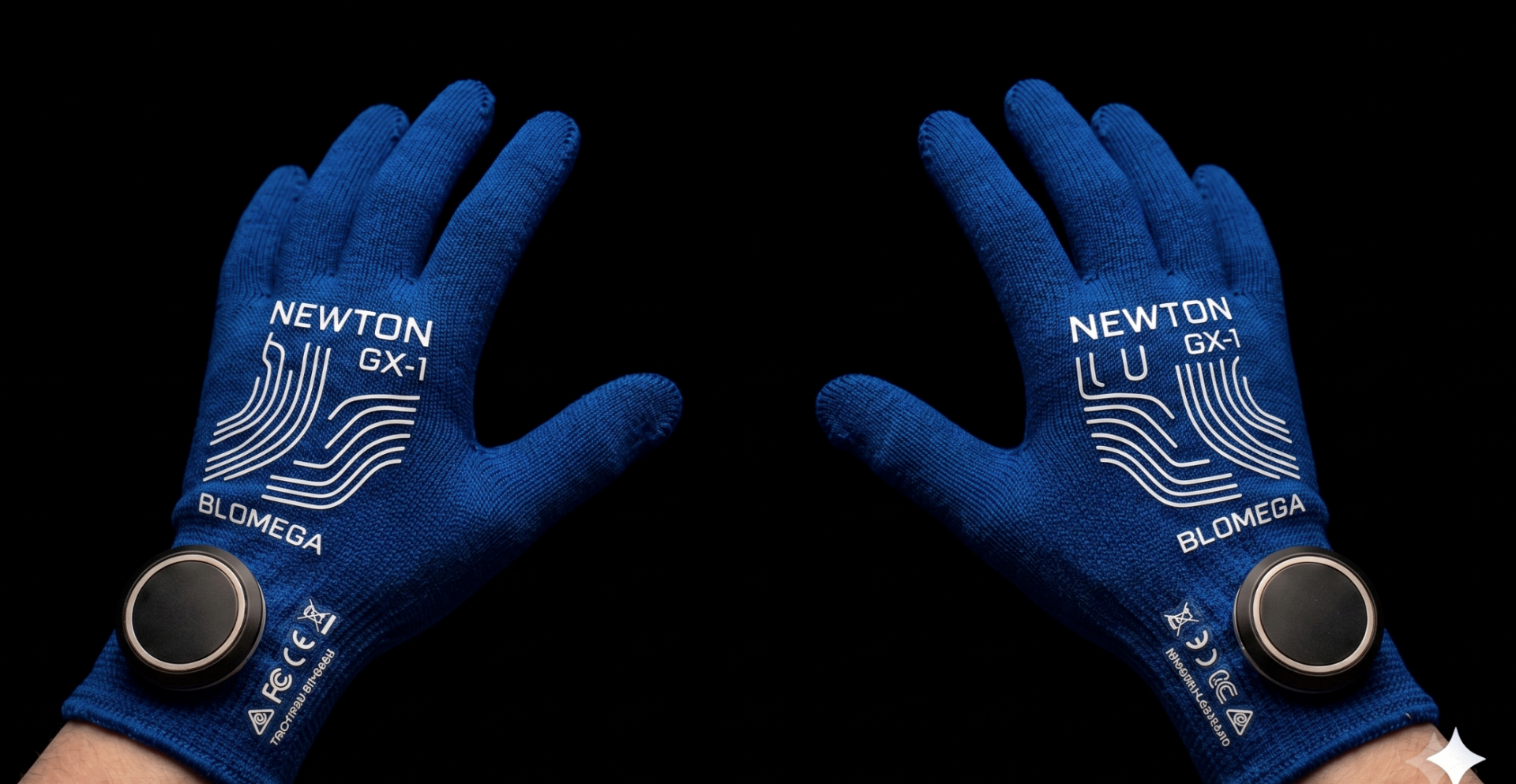
The wearable model has no arm capex, no cell overhead, and no location constraint on the operator. The rig cost is a few thousand dollars per operator, amortized over years. The operator can be paid at market for their skill regardless of geography. Reject rate is dominated by sensor health rather than arm reliability, and sensor health is easier to engineer.
The result is a fully-loaded cost per usable hour that is roughly a quarter of the teleop-warehouse figure at comparable quality, once volume is above a few hundred thousand hours per year. This is not a marketing claim; it is what the arithmetic says when you write it out honestly. It is why we built BLO LAB as a wearable-first company.
Building or training robots?
We license manipulation datasets and run custom capture programs. Get in touch to see what fits.