Compliance Policies Are Undertrained Because Compliance Data Is Rare
The robotics community has known for years that compliant behavior is essential and that most learned policies do not exhibit it. The reason is upstream of any model architecture, the training data does not contain the signal.
There is a striking pattern in the last five years of manipulation research. Every survey identifies compliance as a critical capability. Every deployment postmortem cites lack of compliance as a top failure mode. Every new hardware platform ships with better compliance primitives than the previous one. And yet the policies that get trained across the field remain, in aggregate, stiffness-blind. The reason is not neglect. It is that the data does not exist to fix the problem at model-training time.
What compliance-aware training data would look like
A dataset useful for training compliance-aware policies must contain three things at every timestep. The pose of the manipulator, the applied force at each contact point, and the effective stiffness of the demonstrator at that moment. Pose alone is a shape without a spring. Pose plus force is a shape with a load. Pose plus force plus stiffness is the full specification of a compliant motion, and it is what a policy needs if it is going to reproduce compliant behavior at inference.
Stiffness is the hard one. It is not measured directly. It is inferred from the joint torques, the joint velocities, and the observed responses to external perturbations. For a robot teleoperator this inference requires access to the low-level joint feedback of the leader device. For a human demonstrator it requires either careful biomechanical instrumentation or a high-rate force-and-pose stream from which effective stiffness can be estimated.
Most datasets contain none of this. They contain pose. Sometimes they contain a wrench at the wrist. Almost never do they contain per-finger force at rates useful for stiffness inference. The result is a training corpus that specifies motion without specifying how the motion should respond to being disturbed.
What a policy trained without compliance data learns
It learns to command positions. Confronted with an unexpected obstacle, it commands the same position more emphatically. This is exactly the behavior you would want in a pick-and-place task with rigid, well-modeled objects. It is exactly the behavior you would not want in insertion, in cloth manipulation, in bimanual handover, or in any interaction with a human.
The result is the pattern already described in the slip-detection piece: benchmarks reward the policy, deployments punish it. The failure is not in the model. The failure is in the specification the model inherited from the data. You cannot ask a policy to be compliant when its training corpus consists of behaviors that were themselves not compliant.
Why the community has been slow to fix the data
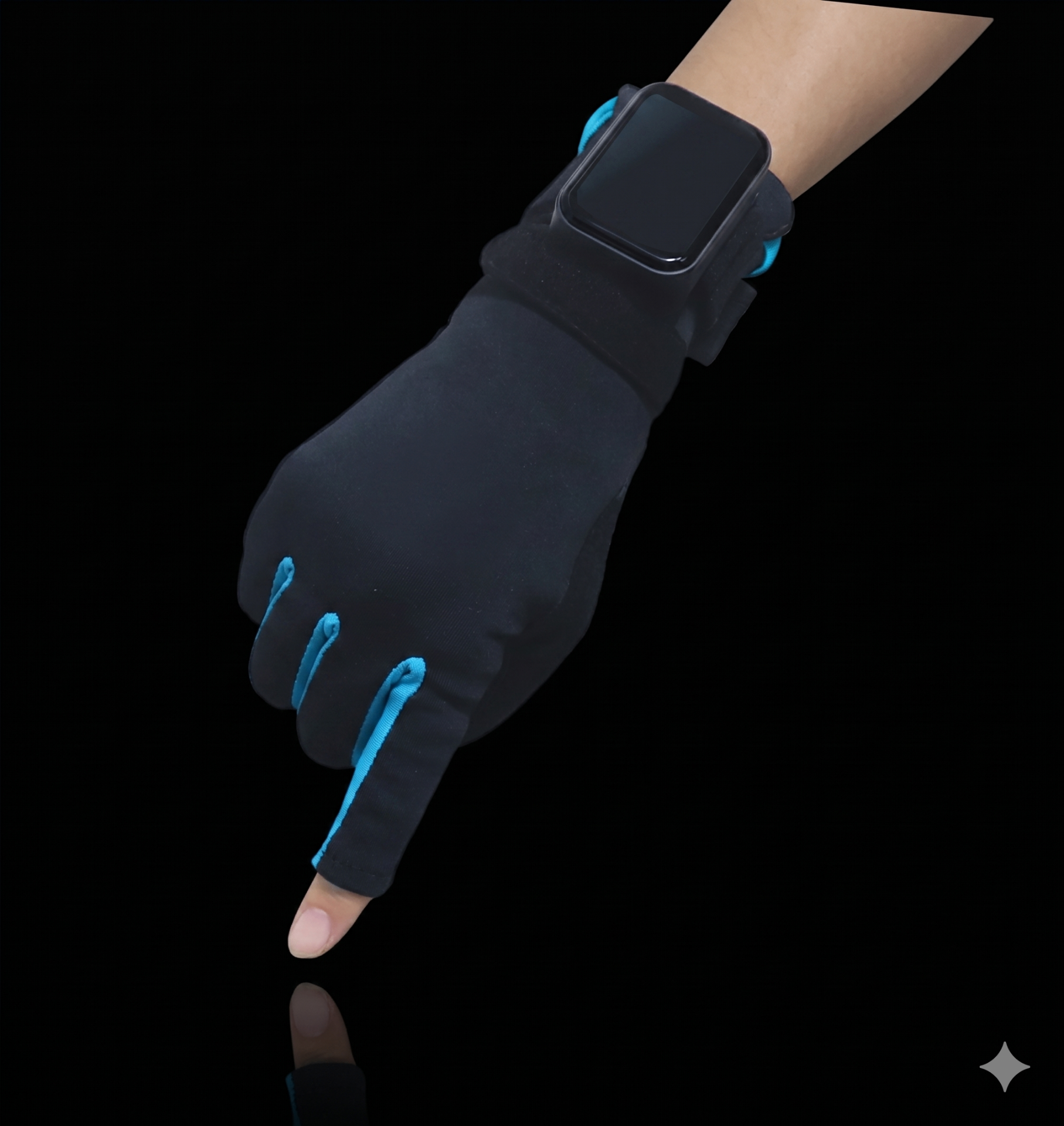
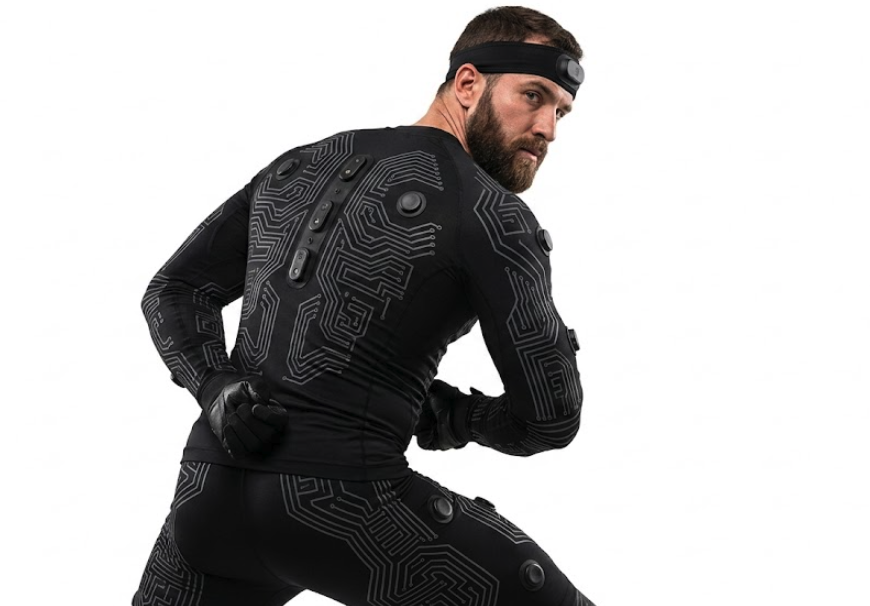
The specific fix, capturing force and pose at rates and calibrations that allow stiffness to be recovered downstream, is straightforward in principle and hard to operationalize at scale. It requires capture hardware built against a spec that historically has been treated as research-grade rather than production-grade. It requires operators who wear the hardware for hours at a time without generating unusable calibration drift. It requires a pipeline that promotes the resulting signals into first-class training tensors rather than into optional side channels.
None of these are academic problems. They are supply-chain, operations, and product problems, and they have historically fallen between the disciplines that make up robotics research. The wearable capture category exists to consolidate them, because a single company optimizing across all three layers can deliver the data the research community has been unable to produce as a side effect of its normal workflow.
Where the leverage is
A modestly-sized corpus of compliance-labeled human demonstration data can outperform a very large corpus of pose-only data on the class of tasks that compliance actually matters for. The scaling curves for compliance-critical behaviors are not the same as the scaling curves for pick-and-place. Adding force-and-stiffness signal is worth an order of magnitude of additional pose-only demonstrations on the tasks it applies to.
This is a specific and testable claim. It is the reason foundation-model teams that have not yet added compliance-rich data to their training mix are going to add it in the next twelve to eighteen months, and it is the reason wearable capture at scale is the category the next round of dataset-supplier activity is going to consolidate around.
Building or training robots?
We license manipulation datasets and run custom capture programs. Get in touch to see what fits.